
Overview
OzGrav–KAGRA Joint ECR School 2026
The OzGrav Early Career Researcher (ECR) School 2026 will be held in Kanazawa, Japan, bringing together early career researchers from across Australia and Japan for an immersive week of scientific exchange, training, and collaboration.
This joint initiative between OzGrav and KAGRA provides a unique opportunity for participants to engage directly with the international gravitational-wave community. The program is designed to support the professional development of ECRs through a combination of technical sessions, collaborative activities, and networking opportunities.
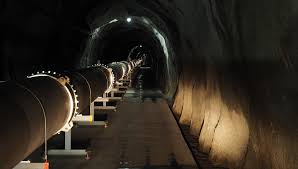
Participants will take part in a structured program of lectures and presentations, alongside interactive discussions and group-based learning. A key highlight of the School is a site visit to the KAGRA Observatory, offering first-hand insight into one of the world’s leading gravitational-wave detectors.
Beyond the academic program, the School aims to strengthen connections across the OzGrav network and foster new international collaborations.
Date and Location
📅 Dates
The program will run across four days:
- Sunday 28 June 2026 – Arrival in Japan (Tokyo → Kanazawa)
- Monday 29 June 2026 – KAGRA Observatory Visit + Welcome Reception
- Tuesday 30 June – Thursday 2 July 2026 – ECR School Program
- Thursday 2 July 2026 (afternoon/evening) – Return to Tokyo and departure
📍 Location: Kanazawa, Japan
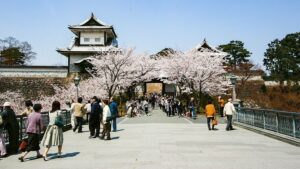
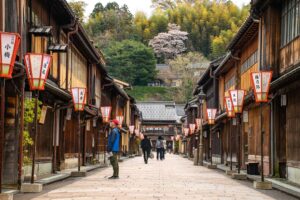
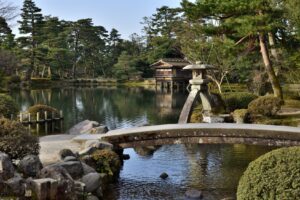
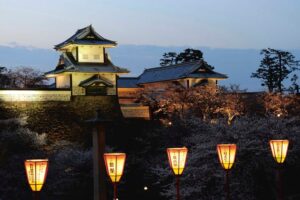
Kanazawa is a historic city on Japan’s west coast, known for its preserved Edo-period districts, traditional teahouses, and one of Japan’s most celebrated landscape gardens, Kenrokuen.
The city offers a compact, walkable environment with excellent transport links and a rich cultural backdrop — making it an ideal setting for focused learning and collaboration.


Accommodation
Accommodation will be provided at the Kanazawa Garden Hotel, located centrally and within walking distance of key attractions and transport links.
All participants will be accommodated in:
- Single rooms (i.e. you will have your own room)
This has been arranged to ensure comfort and flexibility for all attendees. Rooms have been reserved for the full duration of the program.




Breakfast
Participants will have the option to include breakfast at the hotel. Further details will be provided closer to the event.
Important Notes
- Accommodation is covered only for the official event dates
- Requests for extended stays (before or after the event) may be possible but will be at the participant’s own cost and subject to availability
Accessibility & Special Requirements
If you have:
- Medical needs
- Accessibility requirements
- Dietary restrictions
Please contact:
📧 ozgravadmin@swin.edu.au
We are committed to supporting all participants.
Program
Speakers
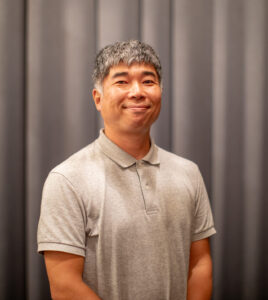 Professor Kentaro Somiya
Institute of Science Tokyo
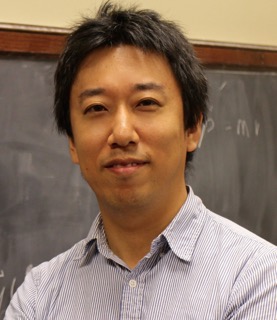 Associate Professor Atsushi Nishizawa
Hiroshima University
 Associate Professor Bram Slagmolen
Australian National University
 Dr Ling Sun
Australian National University
 Diana Haikal
Swinburne University
 Jackie Bondell
Swinburne University
 Dr Carl Blair
University of Western Australia
 Dr Kirsten Banks
Swinburne University
Program
Please note that the program is subject to change and may be updated prior to the OzGrav–KAGRA ECR School.
Open full program ↗
Travel + Support
Participants will be travelling to Kanazawa, Japan for the OzGrav–KAGRA ECR School 2026.
As Kanazawa does not have a major international airport, travel will involve:
- An international flight into Tokyo (Haneda Airport – HND recommended) or Tokyo (Narita Airport – NRT)
- A domestic transfer to Kanazawa via Shinkansen (bullet train)
Detailed guidance is provided below to assist with planning.
Arrival in Japan
Participants are expected to:
- Arrive in Tokyo on Sunday 28 June 2026
- Travel onward to Kanazawa on the same day
Haneda Airport is recommended due to its convenient access to central Tokyo and Shinkansen connections.
Travel from Tokyo to Kanazawa
From Tokyo, participants will travel to Kanazawa via the Hokuriku Shinkansen (bullet train).
Key Details
- Travel time: approximately 2.5–3 hours
- Departure station: Tokyo Station
- Arrival station: Kanazawa Station
Kanazawa Station is centrally located and within close proximity to the accommodation and meeting venues.
Further guidance on recommended train routes and booking options will be provided closer to the event.
Booking Flights
Each OzGrav node is responsible for:
- Booking and paying for flights upfront
- Ensuring travel aligns with the program schedule
Once flights are purchased, nodes can submit invoices to Swinburne (OzGrav HQ) for reimbursement.
Flight Reimbursement
OzGrav will reimburse return economy airfares up to the following caps:
- Up to $1,200 AUD per traveller (Sydney, Melbourne, Brisbane, Canberra)
- Up to $1,300 AUD per traveller (Perth and Adelaide)
Any costs exceeding these caps will need to be covered by the node.
Important Travel Conditions
Please note:
- OzGrav will not reimburse:
- Visa or transit visa costs
- Travel insurance
- Personal travel or upgrades
- Participants are responsible for ensuring:
- Flights align with the program schedule
- Sufficient transit time between connections
- We strongly recommend booking flights early to remain within reimbursement caps
Visa Requirements
Participants are responsible for checking and arranging their own visa requirements. Please refer to the official Japanese Government website: Japan Ministry of Foreign Affairs – Visa Information
Visa requirements vary depending on nationality. Processing times can differ, so early planning is recommended.
Travelling with Medications
Japan has strict regulations regarding prescription and controlled medications.
If you are travelling with medication, please ensure you:
- Check whether your medication is permitted
- Obtain any required documentation or approvals prior to travel
Further information is available here: Bringing Medicines into Japan
Travelling with Others
Please note:
- OzGrav is unable to support or accommodate partners, family members, or accompanying persons
- Accommodation and event participation are limited to approved participants only
If you plan to travel with others independently, you will need to arrange separate accommodation and cover any associated costs.
Getting Around in Kanazawa
Kanazawa is a compact and walkable city.
- Most key locations (hotels, venues, attractions) are within walking distance
- Public transport (buses and taxis) is readily available if needed
Further local transport guidance will be provided closer to the event.
Weather
Late June to early July in Kanazawa is typically:
- Warm and humid
- Temperatures ranging from 20°C to 30°C
We recommend:
- Light, breathable clothing
- Comfortable walking shoes
- A light umbrella or rain jacket
EOI and Abstract Submission
Registration
There will be up to 30 spots for OzGrav ECRs to attend the event and 30 spots for KAGRA ECRs.
The application form for ECRs in Japan will be coming soon.
Due to the limited number of places, the registration process will follow the steps below:
- Call for EOI
A call for EOIs and Abstracts will be circulated for those interested in attending the School. The submission deadline is 11:59 pm AEST, Saturday 18 April. - EOI review
The Organising Committee (OC) will review the submissions and select participants. - Registration invitation
A registration link will be sent to participants who have been accepted.
Please note:
- Preference will be given to members who have not attended previous ECR Winter Schools.
- Senior members are expected to submit an abstract if they wish to join the School.
EOI and Abstract Submission
EOI and Abstract submission are now closed.
Things to do in Kanazawa
During free time, participants may wish to explore:
Kenrokuen Garden
One of Japan’s most famous landscape gardens.
Kanazawa Castle
Historic site located next to Kenrokuen.
Higashi Chaya District
Traditional teahouse district with preserved architecture.
Omicho Market
Fresh seafood and local food experiences.
Public Bathhouses (Onsen)
Traditional Japanese bathing experience.
Explore more options here: Visit Kanazawa
Code of Conduct
We ask attendees to read and adhere to the OzGrav Events code of conduct policy that outlines behaviour that will not be tolerated. In particular:
- Behave professionally. Harassment and sexist, racist, or exclusionary comments or jokes are not appropriate. Harassment includes sustained disruption of talks or other events, inappropriate physical contact, sexual attention or innuendo, deliberate intimidation, stalking, and photography or recording of an individual without consent. It also includes offensive comments related to gender, sexual orientation, disability, physical appearance, race or religion.
- All communication should be appropriate for a professional audience, including people of many different backgrounds.
- Participants asked to stop any inappropriate behaviour are expected to comply immediately. Attendees violating these rules may be asked to leave the event at the sole discretion of the organisers without a refund of any charge.
- You are welcome to engage with this event and your colleagues through social media, provided that your communications are respectful, appropriate for a professional audience, and adhere to the Code of Conduct. If you have questions or criticisms about a colleague’s research or presentation, we strongly encourage you to communicate that directly to your colleague rather than via social media. We also encourage you to only post things on social media about other people, which you would be comfortable saying to them in person.
Organising Committee
The OzGrav–KAGRA ECR School is organised by a joint Australian–Japanese committee representing both communities.
- Kentaro Somiya, The Institute of Science Tokyo
- Diana Haikal, Swinburne University of Technology
- Jackie Bondell, Swinburne University of Technology
- Ari Hernandez, Swinburne University of Technology
- Kenta Tanaka, The Institute of Science Tokyo
- Hayato Imafuku, University of Tokyo
- Daiki Watarai, University of Tokyo
- Kazuya Kobayashi, University of Tokyo
- Neil Lu, The Australian National University
- Olivia Vidal Velázquez, Swinburne University of Technology
- Christine Lee, University of Melbourne
- Samuel Sentschuk, Adelaide University
Contact Us
If you have any questions, please contact the organisers at
ozgrav@swin.edu.au.