A Decade’s Worth Of Gravitational Wave Data Reveals New Black Hole Behaviour

In 1916, Albert Einstein published the paper that predicted gravitational waves – ripples in the fabric of space-time resulting from the most violent phenomena in our distant universe, such as supernovae explosions or colliding black holes.

It took a century for Einstein’s theory to be proven when, in September 2015, the newly commissioned Advanced Laser Interferometer Gravitational-Wave Observatory (LIGO) detectors observed gravitational waves that resulted from merging black holes approximately 1.3 billion light-years away. This watershed achievement earned three of LIGO’s founding members the 2017 Nobel Prize in Physics.

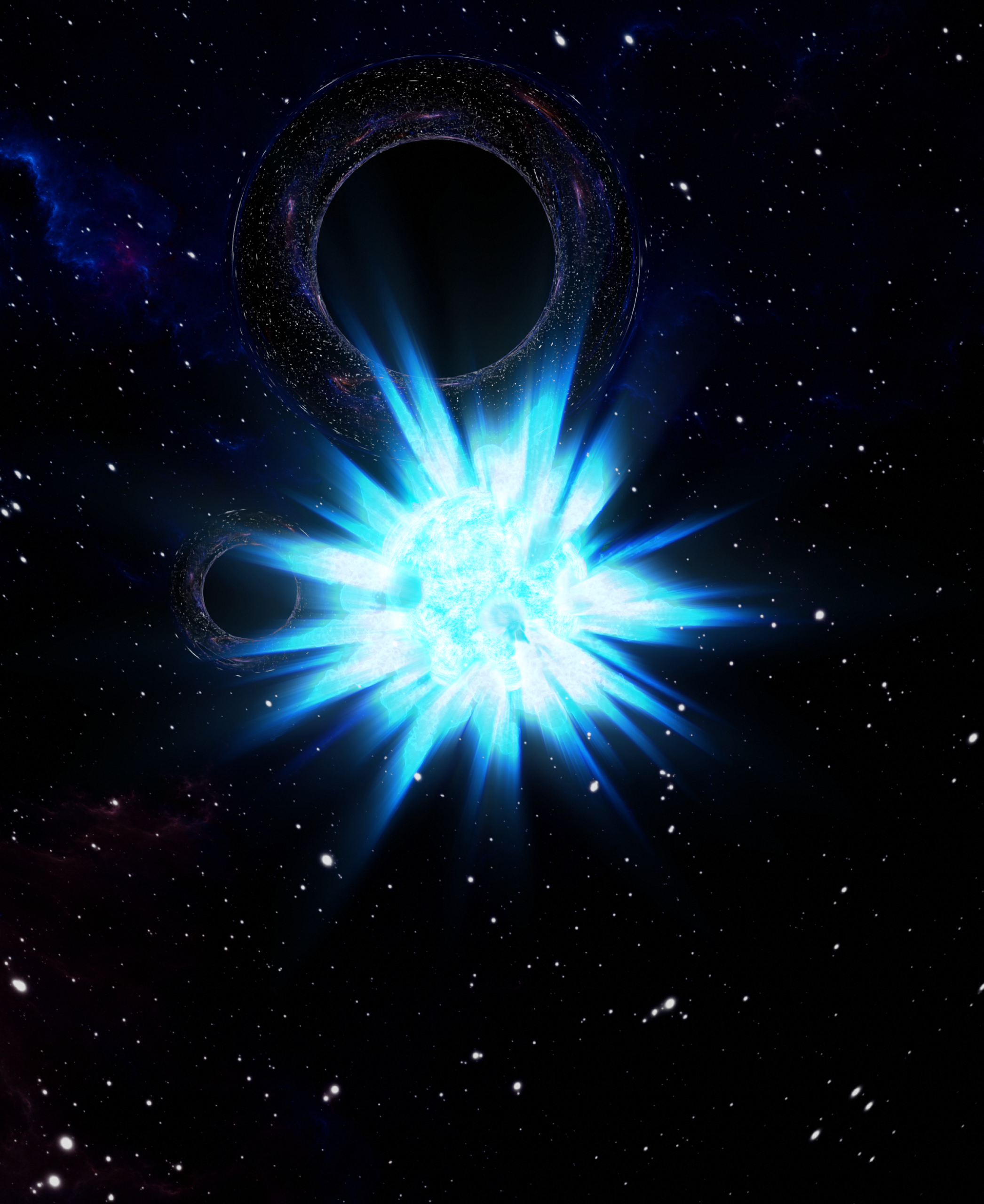
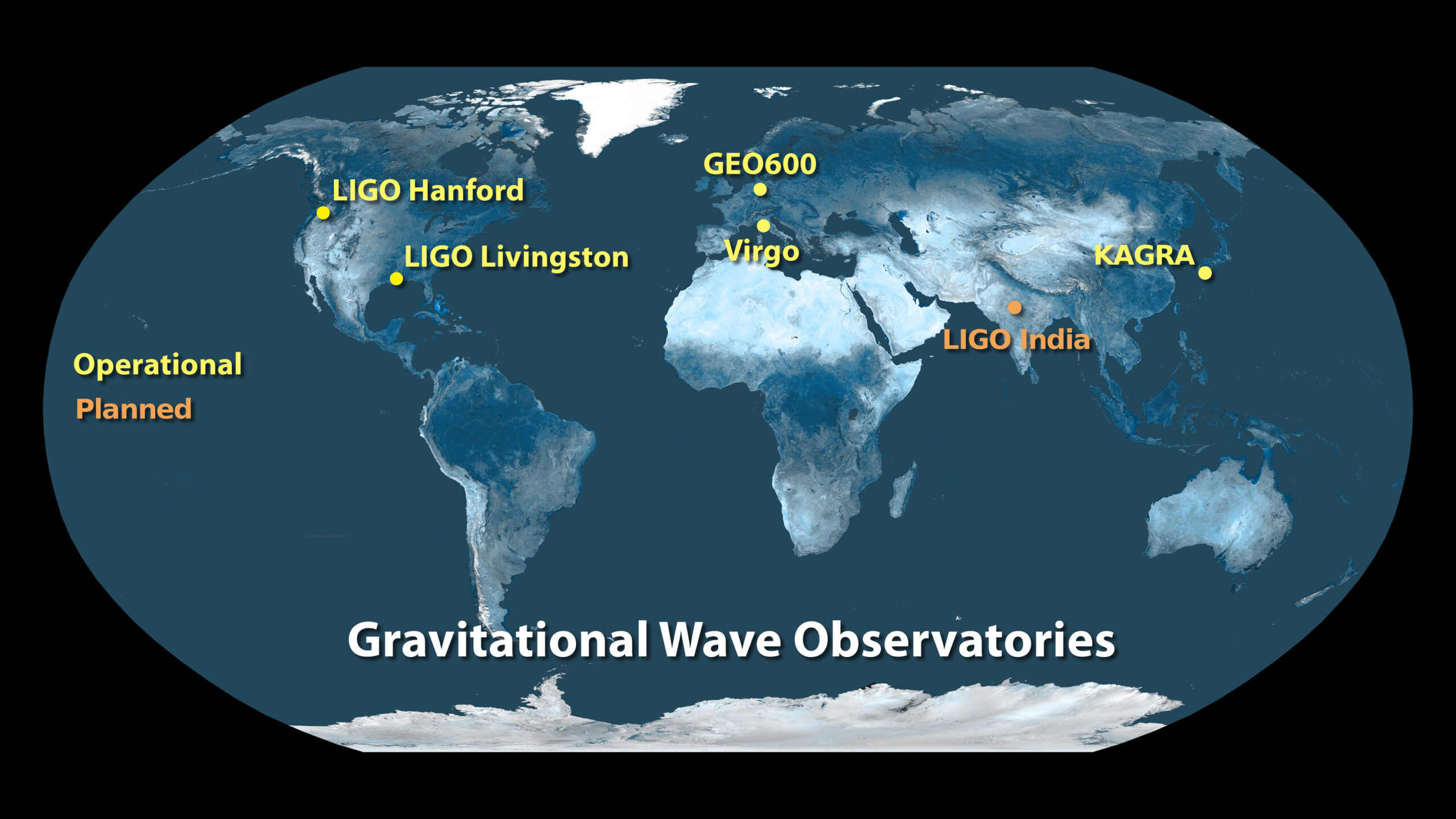
Today, more than 80 Australian researchers, amongst over 2000 scientists globally, have published data on the whole catalogue of gravitational-wave observations accumulated since September 2015. In total, 218 events have been recorded including three types of binary mergers: binary neutron star; neutron star–black hole; and binary black hole mergers.

Black holes have a gravitational pull so strong that nothing, not even light, can escape it. This makes them difficult to detect with conventional telescopes. They are characterised by their masses, measured in units equivalent to the mass of our Sun, and their spins.

According to lead Australian author, Christian Adamcewicz, from Monash University and the ARC Centre of Excellence for Gravitational Wave Discovery (OzGrav), many aspects of these black holes and the stars that form them remain a mystery.

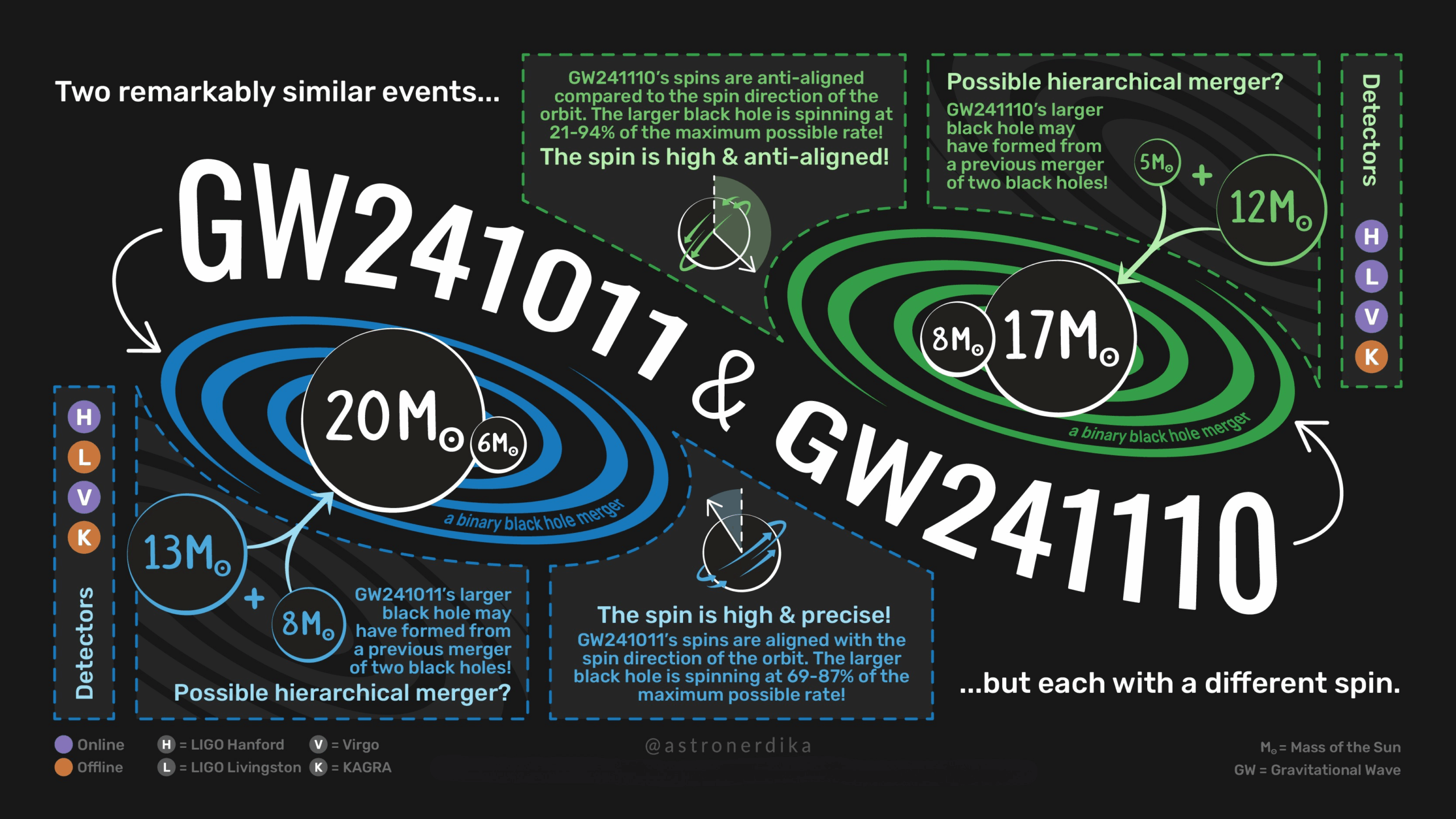
“By observing the rapidly growing population of compact binary mergers through gravitational waves, thanks to our increasingly sensitive detectors, we’re uncovering vital clues about the lives and deaths of stars,” says Dr Ling Sun from the Australian National University and OzGrav. “Taking the 161 of the 218 mergers seen in the last decade, we’ve been able to decipher aspects of their behaviour from their masses,” Adamcewicz added.

“We found that most black holes have masses less than about 40 times that of our Sun. For a while, we’ve had this hypothesis that heavy black hole progenitors – the stars we would normally expect to turn into black holes heavier than 40 Suns – create supernovae so explosive that any evidence of them is annihilated. We’d never seen clear evidence for that previously, but this newly discovered drop off in our observations matches that prediction really well.”

He adds that “it’s not possible to test stuff on this scale in the lab, so, while we wait to collect the data we need, we rely on extrapolating and piecing together our knowledge from other areas. When you’re talking about the most extreme events in the Universe, these assumptions often break down. In this case, what we thought we would see with black holes in that mass range turned out to be accurate.” Sun shares a similar sentiment; “these cosmic collisions serve as natural laboratories, helping us piece together how black holes and neutron stars form, evolve, and interact across the Universe.”

LIGO Detects Most Massive Black Hole Merger to Date

Gravitational waves from record‑breaking black holes challenge current astrophysical models

The LIGO-Virgo-KAGRA (LVK) Collaboration has observed the heaviest black‑hole merger ever detected, registering gravitational waves from two rapidly spinning giants that coalesced into a single black hole about 225 times the mass of our Sun. Designated GW231123, “GW” for gravitational wave and “231123” for the detection date 23 November 2023, the signal was captured during the fourth LVK observing run and publicly released on Monday, 14 July 2025.

“This collision is so distant that the ripples we’re measuring began their journey billions of years ago, long before dinosaurs walked the Earth,” says Professor Eric Thrane, OzGrav Chief Investigator at Monash University. “Yet that tenth of a second blip forces us to rethink how very heavy, rapidly spinning black holes come to be.”

GW231123 involved black holes of roughly 100 M☉ and 140 M☉, far beyond the masses predicted by standard stellar evolution theory. Their extreme spin hints that these monsters may have grown through successive mergers rather than a single stellar collapse.

An infographic detailing the new GW231123 black hole merger.
An infographic detailing the new GW231123 black hole merger. Credit- Simona J. Miller, Caltech

“Their spin is near the limit of what’s physically possible,” Thrane explains. “Observing two black holes whirling so fast when they merge tells us something, either they were born spinning like tops, or something in their lives wound them up to these incredible speeds.”

Unravelling the short, complex GW231123 signal stretched detection hardware and waveform modelling to their limits. Since LIGO’s first discovery in 2015, the LVK network has catalogued ≈300 black‑hole mergers, more than 200 of them in the current observing run alone.

“Gravitational wave astronomy is barely ten years old,” Thrane notes. “Each observing run delivers discoveries that would have been science fiction a decade ago, and this latest event is our most dramatic example yet.”

The calibrated data for GW231123 are now public via the Gravitational‑Wave Open Science Centre (GWOSC), enabling researchers worldwide to probe whether heavy, fast‑spinning black holes form a new population or point to physics beyond current models.

“Maybe this is just the tip of the iceberg,” Thrane says. “If these heavyweight speed demons are common, we could be on the verge of a major leap in our understanding of how the Universe makes, and remakes, black holes.”

Initial results, released on the arXiv, were presented at the joint GR24 and Amaldi16 gravitational-waves meeting in Glasgow, UK, on 14 July.

Information reproduced in part courtesy of Whitney Clavin, Caltech

Watch | Listen | Learn

Astronomers spot nanosecond ‘spark’ from a defunct NASA satellite while looking for Fast Radio Bursts

Astronomers have detected an ultra-bright burst of radio waves from Relay 2, a NASA communications satellite launched in 1964 and silent since 1967. OzGrav Chief Investigator Adam Deller, Professor of Astrophysics at Swinburne University of Technology, was one of the principal authors of the discovery recently accepted for publication in the Astrophysical Journal Letters.

NASA’s Relay 2 spacecraft orbits between 2 091 km and 7 411 km above Earth, and has been offline since 1967. Credit: NASA

NASA’s Relay 2 spacecraft orbits between 2,091 km and 7,411 km above Earth, and has been offline since 1967. Credit: NASA

“This was a chance discovery made when looking for Fast Radio Bursts, which are millisecond-duration radio pulses that originate in distant galaxies. Despite FRBs being discovered almost 20 years ago, we still don’t know what can generate such short and bright radio emission, which is what is driving us to build better and better machines for finding them,” said Prof Deller. 

The pulse, captured on 13 June 2024 by the CRACO upgrade on CSIRO’s ASKAP radio telescope on Wajarri Yamaji Country in Western Australia, lasted under 30 nanoseconds, more than a million times shorter than the blink of an eye. However, the fact that it was so much shorter than a typical FRB wasn’t immediately apparent. 

“FRBs are intrinsically very brief flashes, but the radio pulse is spread out in frequency by the time they get to us on Earth. Longer wavelengths travel more slowly when passing through the ionised plasma in interstellar space, and so this millisecond pulse gets spread out by the time it reaches us, with the lower frequencies arriving hundreds of milliseconds to seconds later,” explained Prof Deller. “We can only correct for this spreading out roughly when doing the high-speed search for FRBs, but once we find a candidate, we can go back and find the absolute best correction, along with the true duration of the signal.” 

Because the Relay 2 signal showed virtually no dispersion in frequency, researchers immediately suspected a nearby origin rather than a distant galaxy. ASKAP imaging confirmed the burst came from roughly 4,500 km away—the satellite’s position at the moment of detection. 

The team’s pre-print, A nanosecond-duration radio pulse originating from the defunct Relay 2 satellite, outlines two likely causes: an electrostatic discharge (ESD) triggered by charge build-up on the spacecraft, or a fleeting plasma cloud created by a micrometeoroid impact. Either mechanism poses a recognised threat to operational satellites. 

“We were lucky to see it. It is certainly possible that there are many more such bursts happening from this or other satellites. However, in the detailed search that we can do with our ASKAP data, we wouldn’t mistake these as actual FRBs—the lack of spreading out of the signal in frequency is a dead giveaway,” said Prof Deller. 

Beyond protecting spacecraft electronics, studying nanosecond-scale ‘sparks’ can also help astronomers filter out false positives when hunting for genuine cosmic FRBs.  

“It was so totally unexpected to see such a short and bright radio pulse originating from a non-operational satellite – we’re both excited to see if this can be of use for identifying hazards for operational satellites, and hopeful that we can use what we learned to further improve the robustness of our FRB searches,” added Prof Deller. 

Collaboration 

The lead author of the paper is Dr Clancy James (Curtin University node, International Centre for Radio Astronomy Research), while other OzGrav contributors include Chief Investigator Prof. Ryan Shannon.

This work leverages the Commensal Real-time ASKAP Fast Transients (CRAFT) survey’s ability to produce rapid, high-resolution images—technology designed for deep-space FRB searches but now proving invaluable closer to home. 

ASKAP is part of the Australia Telescope National Facility and operates with generous support from the Wajarri Yamaji People, the Australian Government and the Pawsey Supercomputing Research Centre. 

Paper: James C. W. et al. (2025) A nanosecond-duration radio pulse originating from the defunct Relay 2 satellite (arXiv:2506.11462).  

Information reproduced in part courtesy of Charlene D’Monte, ICRAR.’Monte, ICRAR. 

Cosmic mystery deepens as astronomers find object flashing in both radio waves and X-rays

Astronomers from the ARC Centre of Excellence for Gravitational Wave Discovery (OzGrav) and the International Centre for Radio Astronomy Research (ICRAR), in collaboration with international teams, have made a startling discovery about a new type of cosmic phenomenon.

The object, known as ASKAP J1832-0911, emits pulses of radio waves and X-rays for two minutes every 44 minutes.

This is the first time objects like these, called long-period transients (LPTs), have been detected in X-rays. Astronomers hope it may provide insights into the sources of similar mysterious signals observed across the sky.

The team discovered ASKAP J1832-0911 by using the ASKAP radio telescope on Wajarri Country in Australia, owned and operated by Australia’s national science agency, CSIRO. They correlated the radio signals with X-ray pulses detected by NASA’s Chandra X-ray Observatory, which was coincidentally observing the same part of the sky.

“Discovering that ASKAP J1832-0911 was emitting X-rays felt like finding a needle in a haystack,” said lead author Dr Ziteng (Andy) Wang from the Curtin University node of ICRAR.

“The ASKAP radio telescope has a wide field view of the night sky, while Chandra observes only a fraction of it. So, it was fortunate that Chandra observed the same area of the night sky at the same time.”

LPTs, which emit radio pulses that occur minutes or hours apart, are a relatively recent discovery. Since their first detection by ICRAR researchers in 2022, ten LPTs have been discovered by astronomers across the world.

Currently, there is no clear explanation for what causes these signals, or why they ‘switch on’ and ‘switch off’ at such long, regular and unusual intervals.

“This object is unlike anything we have seen before,” Dr Wang said.

“ASKAP J1831-0911 could be a magnetar (the core of a dead star with powerful magnetic fields), or it could be a pair of stars in a binary system where one of the two is a highly magnetised white dwarf (a low-mass star at the end of its evolution).”

However, even those theories do not fully explain what we are observing. This discovery could indicate a new type of physics or new models of stellar evolution.”

Detecting these objects using both X-rays and radio waves may help astronomers find more examples and learn more about them.

According to second author Professor Nanda Rea from the Institute of Space Science (ICE-CSIC) and Catalan Institute for Space studies (IEEC) in Spain, “Finding one such object hints at the existence of many more. The discovery of its transient X-ray emission opens fresh insights into their mysterious nature,”

“What was also truly remarkable is that this study showcases an incredible teamwork effort, with contributions from researchers across the globe with different and complementary expertise,” she said.

The discovery also helps narrow down what the objects might be. Since X-rays are much higher energy than radio waves, any theory must account for both types of emission – a valuable clue, given their nature remains a cosmic mystery.

The paper “Detection of X-ray Emission from a Bright Long-Period Radio Transient” was published overnight in Nature: https://www.nature.com/articles/s41586-025-09077-w 

ASKAP J1832-0911 is located in our Milky Way galaxy about 15,000 light-years from Earth.

Full story available – https://www.icrar.org/xray-transient/

The Conversation article: https://theconversation.com/x-rays-have-revealed-a-mysterious-cosmic-object-never-before-seen-in-our-galaxy-256797

MORE INFORMATION

ICRAR

The International Centre for Radio Astronomy Research (ICRAR) is a joint venture between Curtin University and The University of Western Australia, with support and funding from the State Government of Western Australia. ICRAR is an internationally renowned research centre in radio astronomy, helping to build and support the world’s most powerful radio telescope.

Chandra X-ray Observatory

NASA’s Marshall Space Flight Center in Huntsville, Alabama, manages the Chandra program. The Smithsonian Astrophysical Observatory’s Chandra X-ray Center controls science operations from Cambridge, Massachusetts, and flight operations from Burlington, Massachusetts.

SHOCK INSIGHTS – WHY OBJECTS IN THE RADIO SKY TWINKLE

It’s one of the first things any of us learn about astronomy – stars twinkle while planets don’t. However, other point-like objects in the radio sky also twinkle, or “scintillate,” including spinning neutron stars known as pulsars. A team led by Australian scientists has used a scintillating pulsar to perform tomography of the interstellar medium in our galaxy, mapping previously unseen layers of plasma, including within a rare structure called a bow shock.  

Artist’s impression of a pulsar bow shock scattering a radio beam. Credit: Carl Knox / Swinburne / OzGrav 

The discoveries, published today in Nature Astronomy, challenge existing theories of our local interstellar medium and will lead to new models for pulsar bow shocks. 

The study, led by Dr Daniel Reardon from the ARC Centre of Excellence for Gravitational Discovery and Swinburne University of Technology, is the culmination of over 80 hours of observing the nearest and brightest millisecond pulsar to Earth using MeerKAT, the most powerful radio telescope in the Southern Hemisphere, located in South Africa. 

While pulsars emit radio waves rather than visible light (like stars), they still “twinkle” because of turbulence in the plasma that exists in the space between stars. “This plasma is created from gas that is heated and stirred up by energetic events in our galaxy, like exploding stars,” Dr Reardon said. 

“When a pulsar scintillates, it reveals valuable information about the location, structure, and motion of the plasma, as well as about the dynamics of the pulsar—we use scintillation to get unique insights.” 

The observed pulsar, J0437-4715, is located relatively nearby to our solar system, within an area of our galaxy called the Local Bubble—a region almost devoid of gas and dust, created by the explosions of 15 stars about 14 million years ago.  

Using the data gleaned from MeerKAT, the scientists studied patterns called “scintillation arcs,” which provide a tomographic map of plasma structures in the galaxy that are impossible to study using other methods. “These scintillation arcs revealed an unexpected abundance of compact plasma structures within our Local Bubble, which was thought to be more diffuse,” Dr. Reardon said. 

For the first time, the team also used scintillation to study the bow shock created by the pulsar as it moves supersonically through the interstellar medium. “Travelling at Mach 10, the pulsar and its energetic wind of fast-moving particles create a shock wave of heated gas.” 

This bow shock has been photographed as the energy of the supersonic pulsar heats Hydrogen enough for it to glow red. Yet while most pulsars should create bow shocks, only about a dozen have ever been observed because they are so faint. This study marks the first time scientists have been able to peer inside a pulsar bow shock to measure plasma speeds. “To our surprise, the scintillation arcs revealed multiple plasma layers inside the shock, including a structure moving towards the front of the shock,” Dr Reardon said. 

This groundbreaking study, made possible by the pulsar’s closeness to Earth and the capacity of the MeerKAT telescope, achieved several significant firsts including a measurement of the three-dimensional shape of a bow shock, measurement of plasma speeds inside the shock, and the most detailed view of plasma structures within our Local Bubble. “We can learn a lot from a twinkling pulsar!” 

Read more via The Conversation: https://theconversation.com/twinkling-star-reveals-the-shocking-secrets-of-turbulent-plasma-in-our-cosmic-neighbourhood-243022

How heavy are neutron stars at birth? New study reveals the answer

An international team of astrophysicists from China and Australia, led by former Australian Research Council (ARC) Centre of Excellence for Gravitational-wave Discovery (OzGrav) researcher Prof. Xingjiang Zhu (now a Professor at Beijing Normal University, China), has for the first time determined how massive neutron stars are when they are born.

“Understanding the birth masses of neutron stars is key to unlocking their formation history,” said Dr. Simon Stevenson, an OzGrav researcher at Swinburne University and co-author of the study. “This work provides a crucial foundation for interpreting gravitational wave detections of neutron star mergers.”

Neutron stars are the dense remnants of massive stars, more than 8 times as massive as our Sun, born at the end of their lives in a brilliant supernova explosion.

These incredibly dense objects have masses between one and two times the mass of our Sun, compressed into a ball the size of a city, with a radius of just 10 km.

We can usually only weigh a neutron star (measure how massive it is) when it is in a binary star system with another object, such as a white dwarf or another neutron star. However, in these systems, the first-born neutron star typically gains extra mass from its companion, through a process called accretion, making it difficult to determine its original birth mass.

The research, published in Nature Astronomy, analyses a sample of 90 neutron stars in binary star systems with accurate mass measurements to measure the distribution of neutron star masses at birth, accounting for the mass gained since birth for each neutron star in a probabilistic manner.

The team found that neutron stars are typically born with a mass of around 1.3 times the mass of the sun, with heavier neutron stars being born more rarely.

“Our approach allows us to finally understand the masses of neutron stars at birth, which has been a long-standing question in astrophysics,” said Prof.  Zhu.

The key plot from the paper, showing the inferred birth mass distribution of neutron stars

This finding is important for interpreting new observations of neutron star masses from gravitational wave observations.

The team used Bilby, a software package that OzGrav researchers developed to model neutron star mass distributions. The study’s Australian co-authors are members of the Australian Research Council (ARC) Centre of Excellence for Gravitational-wave Discovery (OzGrav).

To learn more about this discovery, watch Dr. Kirsten Banks interview Dr. Simon Stevenson below!

Paper published in Nature Astronomy

https://www.nature.com/articles/s41550-025-02487-w

Zhi-Qiang You, Xingjiang Zhu et al.

Preprint link: https://arxiv.org/abs/2412.05524

Media Contact

Email: ozgrav.comms@swin.edu.au

Available for interview 

Dr Simon Stevenson | ARC DECRA Fellow, Swinburne University of Technology

Dr Lilli Sun  | ARC DECRA Fellow, Australian National University (ANU)

Professor Eric Thrane  | Monash University

Blinking radio pulses from space hint at a cosmic object that ‘shouldn’t exist’

Research led by OzGrav PhD student Yu Wing Joshua Lee and supervisor Dr Manisha Caleb at the University of Sydney has uncovered the slowest cosmic lighthouse yet – a long-period radio transient – likely a neutron star – spinning once every 6.5 hours. This discovery, found using CSIRO ASKAP radio telescope and published in Nature Astronomy, not only pushes the boundaries of what we thought possible for such objects, which typically rotate very quickly, but also reveals a rare phenomenon: the ability to see radio pulses from both of the star’s magnetic poles. 

Find out more about their discovery in their paper published in Nature Astronomy now: https://www.nature.com/articles/s41550-024-02452-z

 You can also read about it in The Conversation: https://theconversation.com/blinking-radio-pulses-from-space-hint-at-a-cosmic-object-that-shouldnt-exist-246663 

Watch Joshua Lee discuss this discovery with Dr Kirsten Banks in the video below:

Distinguished Professor Susan Scott awarded the George Szekeres Medal

OzGrav is thrilled to congratulate Distinguished Professor Susan Scott on being awarded the George Szekeres Medal, the Australian Mathematical Society’s most prestigious honour. This award recognises outstanding contributions to the mathematical sciences, cementing Susan’s status as a leader in her field.

The medal was presented by Jessica Purcell, President of the Australian Mathematical Society, during the opening ceremony of the joint meetings of the Australian, American, and New Zealand Mathematical Societies in Auckland.

This historic win marks a series of firsts and milestones:

  • Susan is the third woman in Australia to receive the medal.
  • She is the first woman from the Australian National University (ANU) to achieve this recognition.
  • She is only the second person from ANU ever awarded this honour.

A pioneer in gravitational wave theory and mathematical physics, Susan’s groundbreaking work has influenced the global scientific community and inspired a new generation of researchers.

The George Szekeres Medal, named after the celebrated mathematician, is a testament to Susan’s unwavering dedication to advancing mathematical sciences. Her work embodies the very essence of innovation and excellence.

We are incredibly proud to celebrate this well-deserved recognition of Susan’s remarkable career. Watch the video below where Susan shares her journey and reflections on this significant achievement.

Congratulations, Susan!

Image Credit: Australian Mathematical Society

Mapping Ripples in a Cosmic Ocean: New Gravitational Wave Maps Reveal Hidden Black Holes and Cosmic Structure

An international study led by astronomers from Swinburne University of Technology and Monash University has created the most detailed maps of gravitational waves across the universe to date.

The study also produced the largest ever galactic-scale gravitational wave detector and found further evidence of a “background” of gravitational waves: invisible yet incredibly fast ripples in space that can help unlock some major mysteries of the universe.

This international effort, conducted with the MeerKAT radio telescope in South Africa, includes three studies published today in Monthly Notices of the Royal Astronomical Society. Together, these works offer new insights into the universe’s most massive black holes, how they shaped the Universe, and the cosmic architecture they left behind.

Lead author for two of the papers and a researcher at OzGrav and Swinburne, Dr Matt Miles, says the research opens new pathways for understanding the universe that we live in.

“Studying the background lets us tune into the echoes of cosmic events across billions of years,” Dr Miles explained. “It reveals how galaxies, and the universe itself, have evolved over time.”

The MeerKAT Pulsar Timing Array, an international experiment which uses the MeerKAT Radio Telescope in South Africa, one of world’s most sensitive and cutting-edge radio telescopes, observes pulsars and times them to nanosecond precision. Pulsars—rapidly spinning neutron stars—serve as natural clocks, and their steady pulses allow scientists to detect minuscule changes caused by passing gravitational waves. This galactic-scale detector has provided an opportunity to map gravitational waves across the sky, revealing patterns and strengths that challenge previous assumptions. Lead author for one of the studies and a researcher at OzGrav and Monash University, Rowina Nathan comments “it is often assumed that the gravitational wave background will be uniformly distributed across the sky.” Miss Nathan explains “the galactic-sized telescope formed by the MeerKAT pulsar timing array has allowed us to map the structure of this signal with unprecedented precision, which may reveal insights about its source.”

Key findings:

Unprecedented gravitational wave signal
The study uncovered further evidence of gravitational wave signals originating from merging supermassive black holes, capturing a signal stronger than similar global experiments, and in just one-third of the time.

“What we’re seeing hints at a much more dynamic and active universe than we anticipated,” Dr Miles said. “We know supermassive black holes are out there merging, but now we’re starting to ask: where are they, and how many are out there?”

Detailed gravitational wave maps with unexpected hotspots
Using the pulsar timing array, the researchers constructed a highly detailed gravitational wave map, improving upon existing methods. This map revealed an intriguing anomaly – an unexpected hotspot in the signal that suggests a possible directional bias.

“The presence of a hotspot could suggest a distinct gravitational wave source, such as a pair of black holes billions of times the mass of our Sun,” said Miss Nathan. “Looking at the layout and patterns of gravitational waves shows us how our Universe exists today and contains signals from as far back as the Big Bang. There’s more work to do to determine the significance of the hotspot we found, but this an exciting step forward for our field.”

These findings open up exciting questions about the formation of massive black holes and the Universe’s early history. Further monitoring with the MeerKAT array will refine these gravitational wave maps, potentially uncovering new cosmic phenomena. The research also has broad implications, offering data that may aid international scientists in exploring the origins and evolution of supermassive black holes, the formation of galaxy structures, and even hints of early universe events.

With continued work using the MeerKAT array and plans to better understand the pulsar network and gravitational wave signal, researchers aim to refine the map of the gravitational wave background and verify the underlying cosmic structure. “In the future, we aim to understand the origin of the gravitational wave signal emerging from our data sets. By looking for variations in the gravitational waves across the sky, we’re hunting for the fingerprints of the underlying astrophysical processes”, adds Kathrin Grunthal, a researcher from the Max Planck Institute for Radio Astronomy and a co-author of one of the studies.

“By looking for variations in the gravitational wave signal across the sky, we’re hunting for the fingerprints of the astrophysical processes shaping our universe.”

Dr Matthew Miles and researcher Rowina Nathan are available for interviews. For enquiries, please contact ozgrav.comms@swin.edu.au

Professor Matthew Bailes Awarded 2024 Prime Minister’s Prize for Science

OzGrav is proud to celebrate Professor Matthew Bailes, Director of the ARC Centre of Excellence for Gravitational Wave Discovery, as a 2024 recipient of the prestigious Prime Minister’s Prize for Science. This recognition follows his recent Shaw Prize in Astronomy, cementing his standing as one of the world’s foremost astrophysicists.

Reflecting on the prize, Professor Bailes said, “It’s an amazing honour to receive the 2024 Prime Minister’s Prize for Science. If you told me as a child that one day I would receive a prize from the Prime Minister, I don’t think I would’ve believed you.”

Professor Bailes and his team first discovered fast radio bursts (FRBs) in 2007, significantly advancing scientific understanding of the universe. FRBs are intense bursts of radio waves that can last from less than a millisecond to a few seconds and are considered one of the great mysteries of the cosmos. “Professor Bailes’ work on fast radio bursts has created a vital new area of astrophysics that is unlocking the Universe’s mysteries in ways we could not have previously predicted,” said Professor Virginia Kilborn, Chief Scientist at Swinburne University of Technology.

Using archival data from Murriyang, CSIRO’s Parkes radio telescope on Wiradjuri Country, and the Molonglo radio telescope, Professor Bailes and his team discovered 27 of the first 30 FRBs. These discoveries now serve as a cornerstone for scientists studying some of the universe’s most powerful objects. Professor Brian Schmidt remarked, “Professor Bailes was instrumental in building special hardware for Murriyang, CSIRO’s Parkes radio telescope, enabling novel techniques to study short-duration pulsar pulses.”  Professor Bailes now leads Australia’s research into FRBs, pulsars, and gravitational waves at OzGrav, testing gravity theories and advancing the scientific community’s understanding of the universe.

In addition to his groundbreaking research, Professor Bailes is a strong advocate for education and is dedicated to fostering the next generation of Australian scientists and engineers. “I get a lot of joy out of nurturing the next generation of scientists. I enjoy working with smart and passionate people,” he said, reflecting on his role as a mentor. “I love giving talks at schools and bringing students into the lab to see how scientists work.”

This year’s Prime Minister’s Prize for Science marks the 25th anniversary of Australia’s highest scientific honour, which celebrates groundbreaking achievements. Professor Bailes’ research exemplifies the global impact of Australian science and serves as an inspiration for future generations of scientists and innovators.

Watch the amazing video below where Matthew talks about the incredible discovery of Fast Radio Bursts! Hear the excitement behind the first detection and learn how these cosmic signals are reshaping our understanding of the universe.

Read the media release here: https://www.industry.gov.au/publications/prime-ministers-prizes-science-2024/2024-prime-ministers-prize-science

Video Credit: Department of Industry, Science and Resources