2025 OzGrav Achievement Awards

OzGrav Annual Awards

Our Annual Awards celebrate the people and teams who embody OzGrav’s values — excellence in research, collaboration, service, equity, and community. From scientific leadership to mentoring, outreach, and care for others, these awards recognise the many ways our members strengthen both our science and our culture.

We thank the judging panel for their time and thoughtful consideration.


Advancing Equity Award

Winner: Kirsten Banks
Kirsten is recognised for her outstanding leadership in championing First Nations astronomy. Through mentoring Indigenous high school students and creating meaningful pathways into STEM, she has made a lasting contribution to equity, diversity, and inclusion within OzGrav and the broader astronomical community.

Runner-up: Sparrow Roch
Sparrow is recognised for generously sharing their cultural heritage and sky stories, fostering deeper understanding and appreciation of Indigenous perspectives in astronomy and strengthening inclusive engagement across the Centre.


Cross-Nodal Collaboration Award

Winner: Liana Rauf
Liana is recognised as an exemplar of cross-nodal leadership, consistently leading and supporting initiatives that strengthen collaboration across OzGrav. Her work has elevated gravitational-wave cosmology research within the Centre and internationally.

Runner-up: Terry McRae
Terry is commended for his calm, proactive leadership in aligning the efforts of multiple research groups across OzGrav nodes, helping to build strong and sustained collaborations.

Highly Commended:

  • The MeerKAT PTA Team

  • The Arm-Length Stabilisation Team


Mentor Award

Winner: Yeshe Fenner
Yeshe is recognised for her exceptional mentoring, providing thoughtful guidance and support that enables members of the OzGrav community to grow both personally and professionally.

Runner-up: Daniel Reardon
Daniel is commended for his approachability and for fostering a welcoming learning environment that builds confidence and supports students’ aspirations.

Highly Commended:
Ryosuke Hirai, Simon Stevenson, Khaled Said, Terry McRae, Bram Slagmolen, Paul Lasky, Andrés Vargas, Eric Thrane


Professional Resilience Award

Winner: Sparrow Roch
Sparrow is recognised for consistently embodying professional resilience, demonstrating a willingness to take risks, embrace uncertainty, and openly learn from setbacks in pursuit of continued growth.


Research Translation Pioneer Award

Winner: Diana Haikal
Diana is recognised for proposing, designing, and leading the establishment of the Australian Research Translation and Innovation Consortium (ARTIC), creating a new pathway for industry–research collaboration.

Runner-up:
Bram Slagmolen, Robert Ward, Sheon Chua, Avanish Kulur Ramamohan, Lane Scheel
For groundbreaking work developing speed-of-light earthquake and tsunami early-warning technology.

Highly Commended:
Emily Rose Rees, Andrew Wade, Kirk McKenzie
For developing a novel laser-stabilisation technique to improve long-term measurements on the GRACE missions.


Discovery Theme Award

Winner: Teagan Clarke
Teagan is recognised for combining creativity, technical rigour, and a fearless approach to challenging assumptions in multimessenger astronomy. Their work has raised OzGrav’s profile within the LIGO–Virgo–KAGRA community and beyond.

Runner-up: Joshua Lee
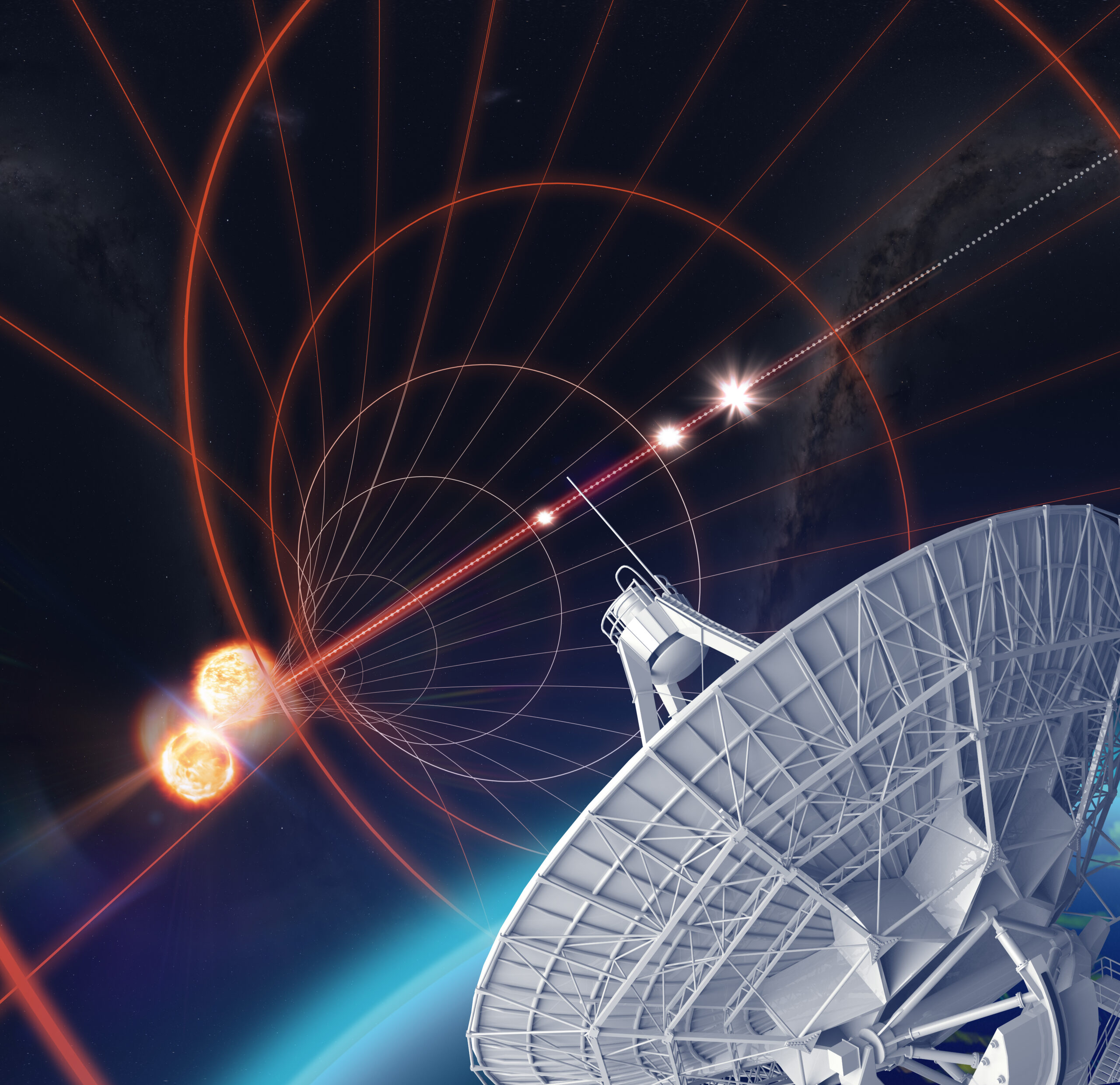
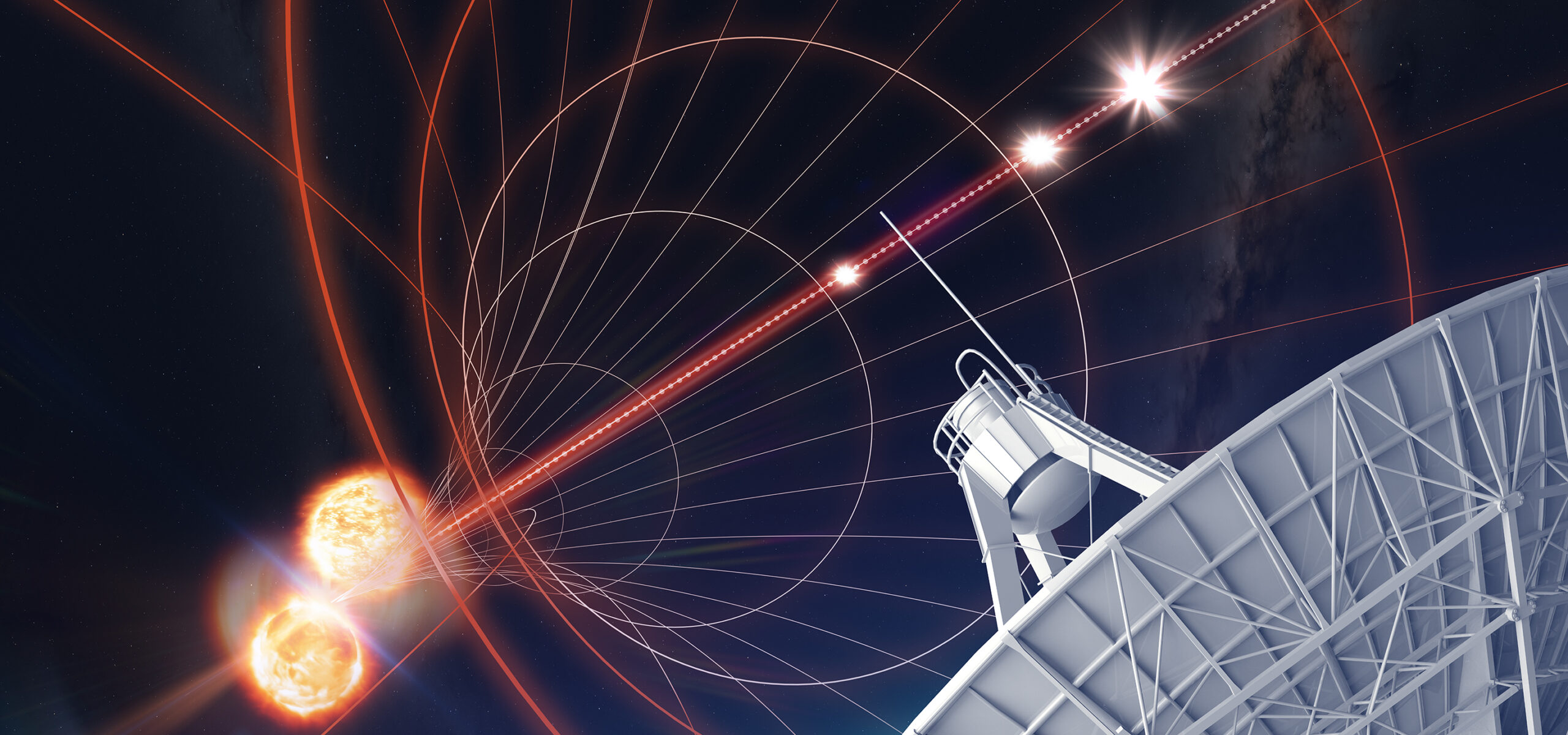
Joshua is commended for his role in the discovery and analysis of a long-period radio transient, delivering results with significant implications for neutron star physics.


Instrumentation Theme Award

Joint Winner: Kar Meng Kwan
Recognised for pioneering work on optical squeezing for gravitational-wave detectors, demonstrating deep technical understanding and innovative problem-solving.

Joint Winner: Thomas Rooke
Recognised for outstanding initiative in developing the QOSEM sensor, a major OzGrav contribution to identifying sources of excess low-frequency noise in LIGO detectors.

Runner-up: Jian Liu
Commended for significant contributions to advanced configuration and control techniques for future detectors.

Highly Commended:

  • Quantum Efficiency Team

  • Coatings Team


Physics Theme Award

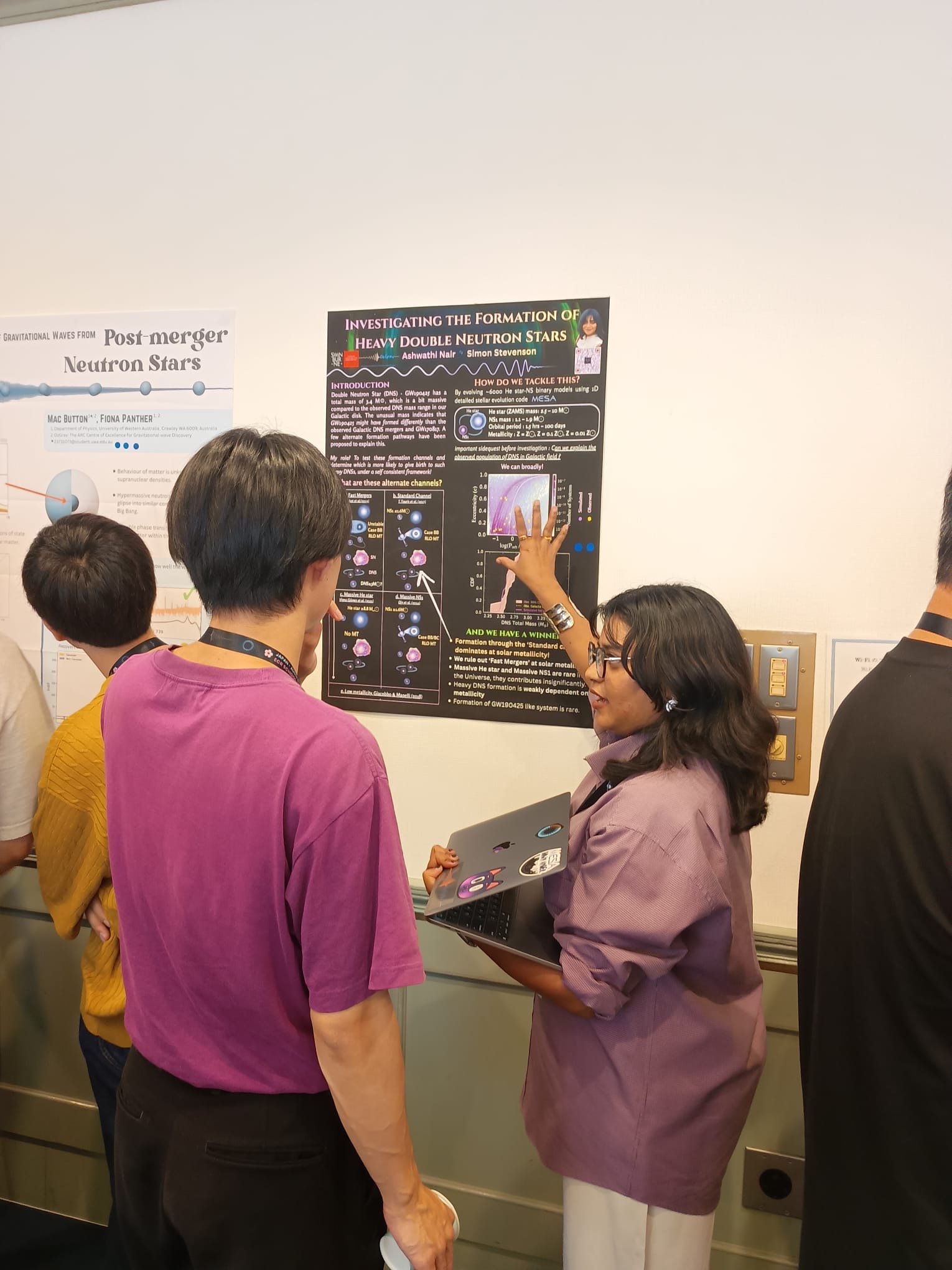
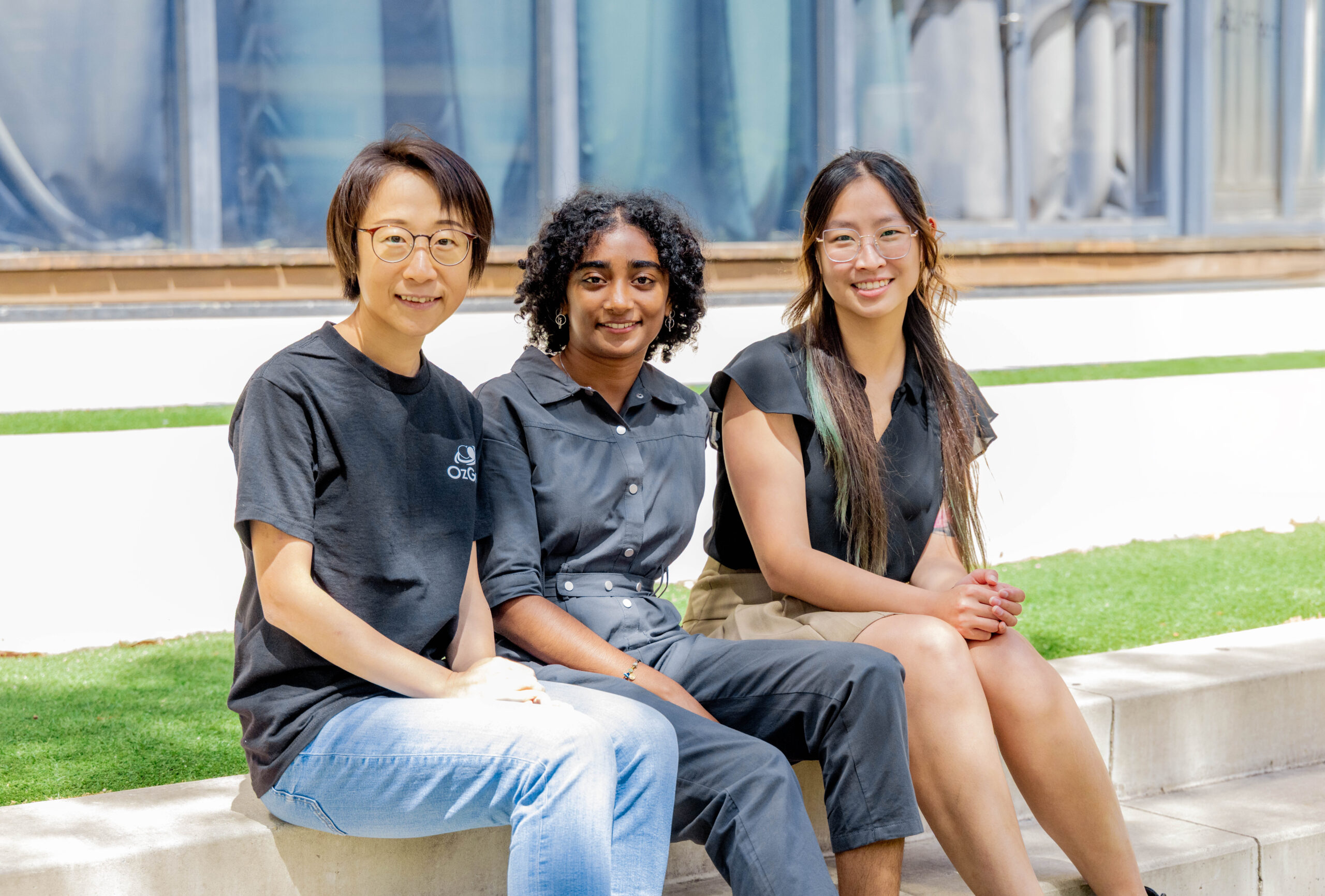
Joint Winners: Lilli Sun, Dana Jones, Fulin Li, Neil Lu, Ornella Piccinni, Aswathi Subhash
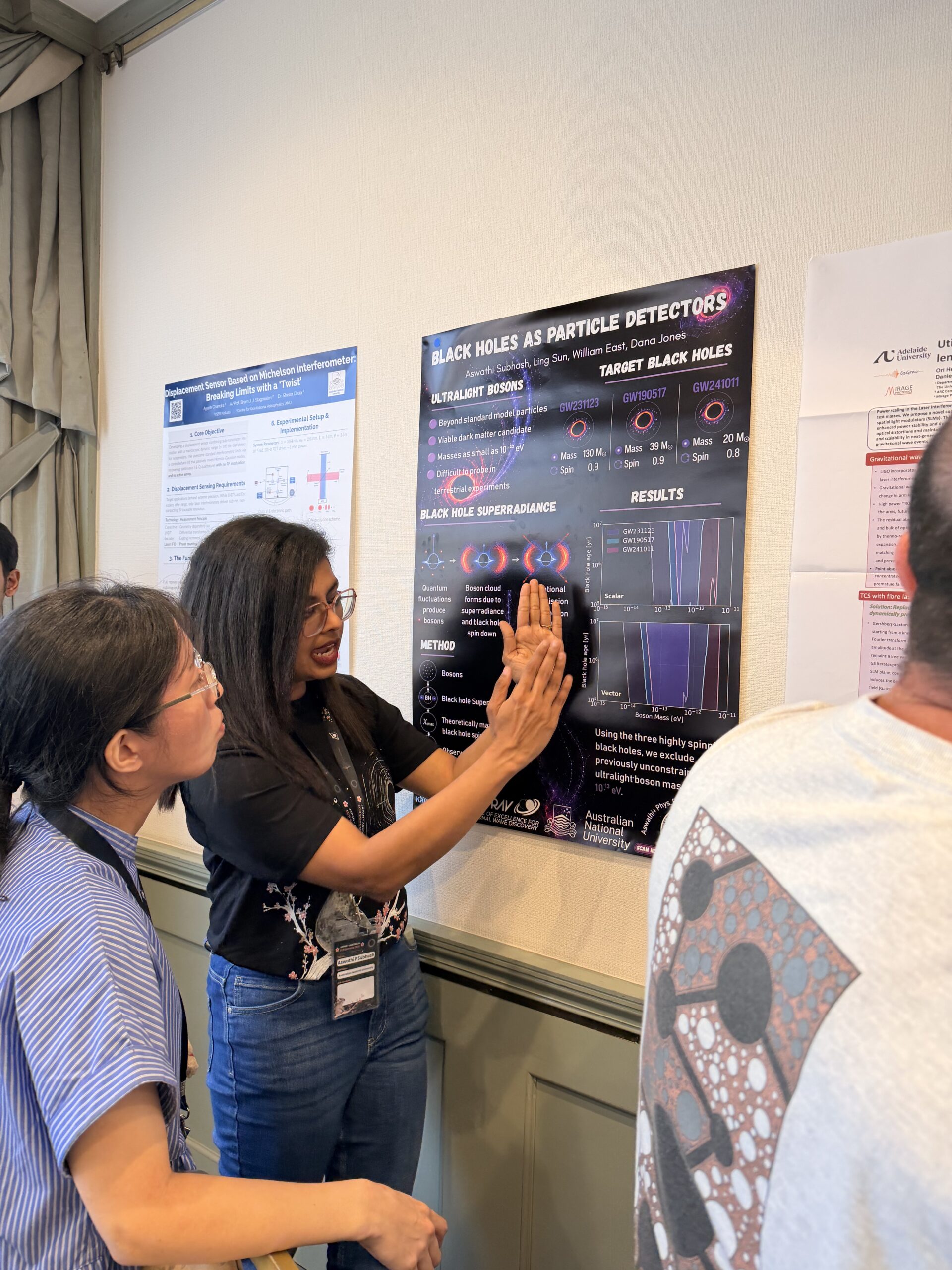
Recognised for leading analyses underpinning major LIGO collaboration papers and for developing new methods to search for ultralight bosonic dark matter using gravitational-wave data.

Runner-up: Neil Lu
Commended for key contributions to multiple LVK papers and for advancing OzGrav’s Gravity Key Program.

Joint Winner: Paul Disberg
Recognised for an exceptional publication record during his PhD, including a standout paper on neutron star kick velocities.


Service Award

Winner: Liana Rauf
Liana is recognised for her exceptional service to OzGrav, including leadership roles on committees, cross-nodal coordination, and program scientist responsibilities.

Runner-up: Karl Wette
Karl is commended for his sustained dedication to the Centre through EDI committee work and broader OzGrav initiatives.

Highly Commended:
Diana Haikal, Neil Lu


Superstars of Outreach Award

Winner: Yi Shuen (Christine) Lee
Christine is recognised for outstanding leadership in outreach, from coordinating major events and developing educational resources to representing OzGrav internationally.

Joint Runners-up:
Chris Flynn — for leadership of the ASTRAL program
Olivia Vidal Velazquez — for consistently exceeding expectations with creativity, professionalism, and enthusiasm

Highly Commended:
The Einstein First Team, OzGrav Outreach Ambassadors


Special Recognition Awards

  • Community Care & Support: Jackie Bondell
    For consistently supporting the wellbeing, comfort, and sense of belonging of OzGrav members.

  • Positive Attitude: Saurav Mishra
    For fostering a welcoming and supportive environment through kindness and positivity.

  • Workshop Organisation:
    10th Anniversary Workshop Team
    For the successful delivery of OzGrav’s milestone event.


Rising Star Award

Winner: Teagan Clarke
Recognised for bold, original science, leadership in collaboration, and a deep commitment to positive research culture.

Runner-up: Paul Disberg
Commended for prolific publications across a wide range of astrophysical topics.

Highly Commended:
Emily Rose Rees, Neil Lu

Twin Black Hole Mergers Reveal Secrets of Cosmic Evolution

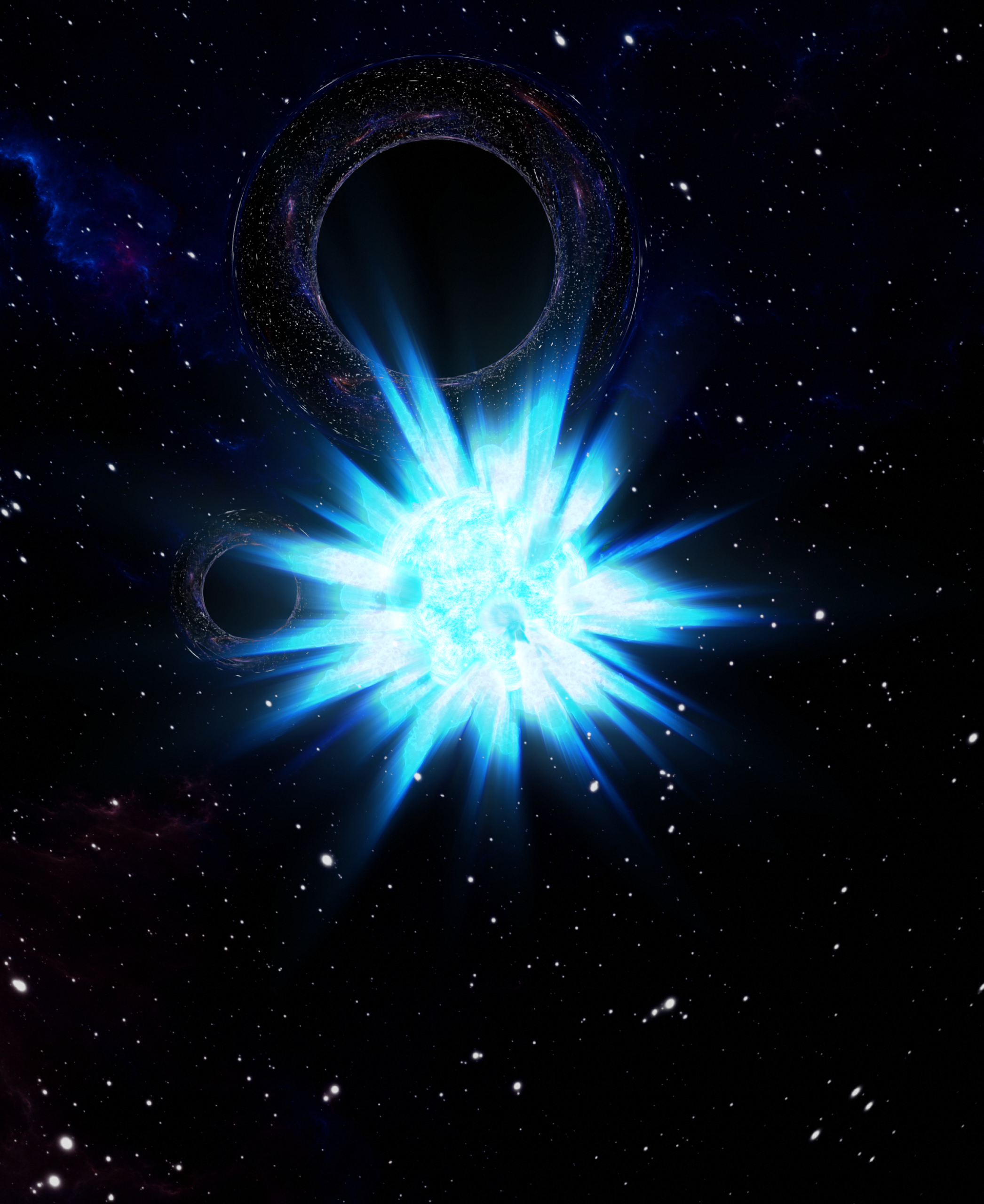
An international team of scientists from the LIGO, Virgo, and KAGRA collaborations, including researchers from the ARC Centre of Excellence for Gravitational Wave Discovery (OzGrav), has detected two remarkable black hole collisions that are offering new insights into both the evolution of the cosmos and the nature of dark matter.

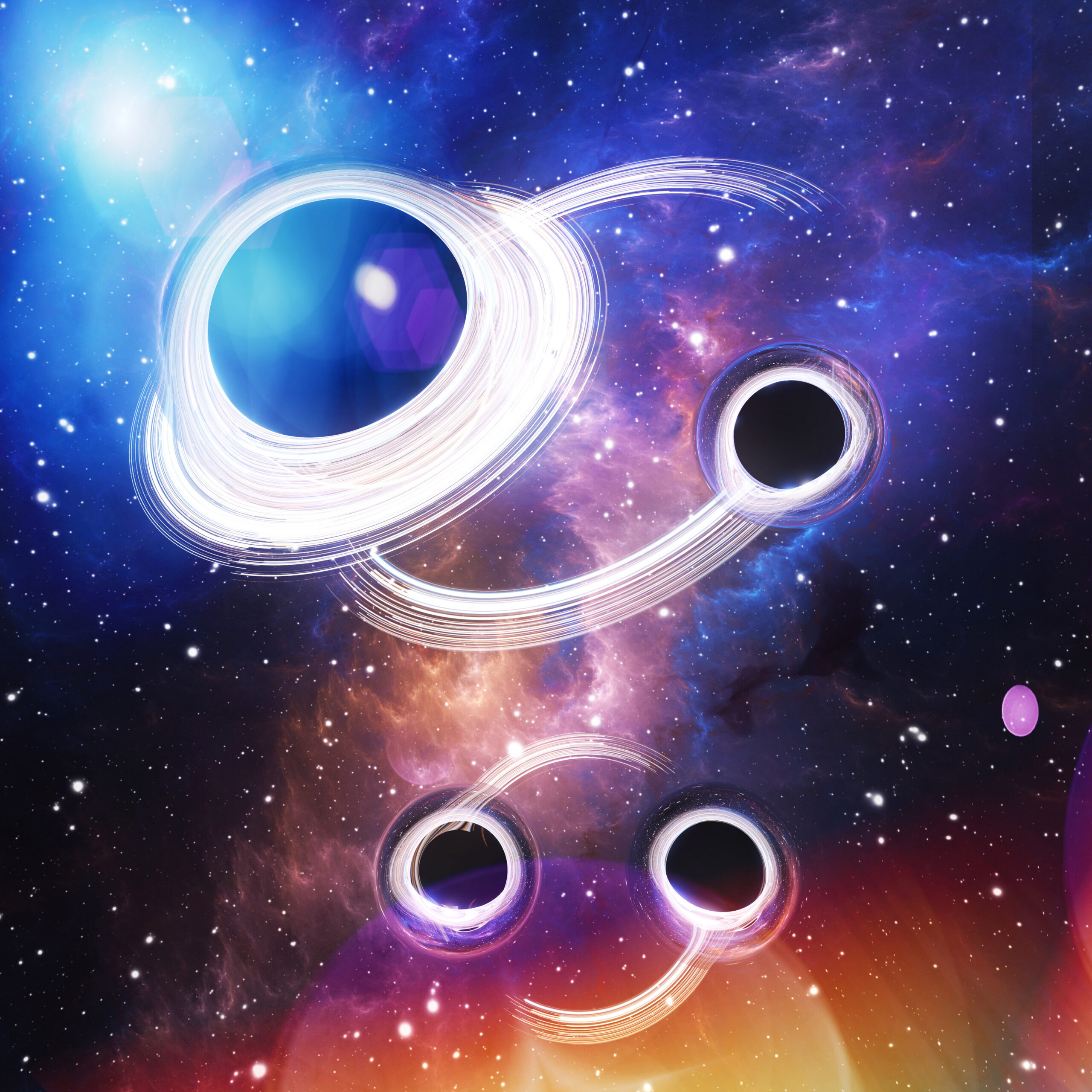
The pair of gravitational-wave events, named GW241011 and GW241110, were detected in late 2024, just one month apart, during the O4b observing run of the global detector network. Each signal was produced by the violent merger of two black holes, forming an even more massive remnant and sending ripples through space-time, each travelling for hundreds of millions to billions of years before reaching Earth.

GW241011 and GW241110 infographic. Credit: Shanika Galaudage / @astronerdika

Both events involved unequal-mass, rapidly spinning black holes, an unusual combination that provides a window into how black holes form and evolve, and how they can be used to test new physics. Using these signals, researchers from OzGrav and the Australian National University (ANU) investigated whether the black holes’ spins could reveal hints of previously undiscovered particles.

OzGrav PhD student Aswathi Pampurayath Subhash from the Australian National University led the analysis focusing on ultralight bosons, hypothetical particles that could make up dark matter. Certain theories suggest these particles might gradually drain rotational energy from black holes over time. But since the black holes in GW241011 and GW241110 were still spinning rapidly when they merged, scientists were able to rule out a wide range of possible boson masses, tightening the constraints on dark matter theories.

Rapidly spinning black holes like those in GW241011 and GW241110 are more than just astrophysical curiosities; they can be used to test the existence of new particles,” said Aswathi Pampurayath Subhash. “By remaining highly spinning over their long lifetimes, they allow us to rule out a wide range of possible ultralight boson masses, placing new constraints on dark matter and theories beyond the Standard Model.”

The data also shed light on how black holes grow and evolve. Both mergers involved one black hole roughly twice as massive as the other, and both showed signs that their spins were tilted compared to the direction of their orbits. This misalignment hints that the systems may not have formed from two stars evolving together, but instead through repeated mergers inside dense star clusters, a process known as hierarchical merging.

These two black hole mergers give us a remarkable glimpse into how black holes grow and evolve,” said Dr Ling (Lilli) Sun from the Australian National University and Chief Investigator at OzGrav. “Their high spins and unequal masses suggest that they may be second-generation black holes, the products of earlier mergers in dense stellar environments, such as star clusters. Each detection adds a new piece to the puzzle of how the most extreme objects in our universe come to be.”

The detections highlight the extraordinary sensitivity of the LIGO, Virgo, and KAGRA observatories, which continue to uncover the hidden stories of the Universe’s most extreme objects. “Each new discovery not only deepens our understanding of black hole formation but also transforms these cosmic collisions into laboratories for fundamental physics,” says OzGrav Chief Investigator Professor Eric Thrane from Monash University.

Together, GW241011 and GW241110 showcase the remarkable progress of gravitational-wave astronomy in revealing the hidden lives of merging black holes. Each detection brings us closer to understanding how these cosmic giants form and evolve, while offering a powerful way to test the fundamental laws that govern the Universe itself.

Check out the explainer video below about the twin black hole mergers:

Information about OzGrav and gravitational-wave observatories:

The ARC Centre of Excellence for Gravitational Wave Discovery (OzGrav) is funded by the Australian Government through the Australian Research Council Centres of Excellence funding scheme. OzGrav is a partnership between Swinburne University of Technology (host of OzGrav headquarters), the Australian National University, Monash University, University of Adelaide, University of Melbourne, University of Western Australia, University of Queensland, and University of Sydney, along with other collaborating organisations in Australia and overseas.

This material is based upon work supported by NSF’s LIGO Laboratory which is a major facility fully funded by the National Science Foundation. NSF’s LIGO Laboratory is a major facility fully funded by the National Science Foundation and operated by Caltech and MIT, which conceived of LIGO and led the Initial and Advanced LIGO projects. Financial support for the Advanced LIGO project was led by the NSF with Germany (Max Planck Society), the U.K. (Science and Technology Facilities Council) and Australia (Australian Research Council-OzGrav) making significant commitments and contributions to the project. More than 1600 scientists from around the world participate in the effort through the LIGO Scientific Collaboration, which includes the GEO Collaboration. A list of additional partners is available at https://my.ligo.org/census.php.

The Virgo Collaboration is currently composed of approximately 880 members from 152 institutions in 17 different (mainly European) countries. The European Gravitational Observatory (EGO) hosts the Virgo detector near Pisa in Italy, and is funded by Centre National de la Recherche Scientifique (CNRS) in France, the Istituto Nazionale di Fisica Nucleare (INFN) in Italy, and the National Institute for Subatomic Physics (Nikhef) in the Netherlands. A list of the Virgo Collaboration groups can be found at: https://www.virgo-gw.eu/about/scientific-collaboration/. More information is available on the Virgo website at https://www.virgo-gw.eu.

KAGRA is the laser interferometer with 3 km arm-length in Kamioka, Gifu, Japan. The host institute is Institute for Cosmic Ray Research (ICRR), the University of Tokyo, and the project is co-hosted by National Astronomical Observatory of Japan (NAOJ) and High Energy Accelerator Research Organization (KEK). KAGRA collaboration is composed of over 400 members from 128 institutes in 17 countries/regions. KAGRA’s information for general audiences is at the website https://gwcenter.icrr.u-tokyo.ac.jp/en/. Resources for researchers are accessible from http://gwwiki.icrr.u-tokyo.ac.jp/JGWwiki/KAGRA.
Media Contacts: 

Diana Haikal
Senior Communications and Engagement Advisor
ARC Centre of Excellence for Gravitational Wave Discovery
Email: dhaikal@swin.edu.au | ozgrav.comms@swin.edu.au

Available For Interview:

Aswathi Pampurayath Subhash
PhD student, Australian National University
Email: u8099525@anu.edu.au

Dr Ling (Lilli) Sun
Chief Investigator, Australian National University
Email: Ling.Sun@anu.edu.au

A Decade of Discovery: Celebrating 10 Years of Gravitational Waves

Last week, the Australian gravitational-wave community gathered at Swinburne University to celebrate a landmark moment in science, the 10-year anniversary of the first direct detection of gravitational waves (GW150914). This discovery, announced in 2016 from data recorded on 14 September 2015, confirmed Einstein’s prediction and opened an entirely new window on the Universe.

The two-day workshop, hosted by the Australian Research Council Centre of Excellence for Gravitational Wave Discovery (OzGrav), brought together more than 80 students, researchers, and leaders from across the country. The workshop was more than just a commemoration of GW150914, it was a chance to reflect on Australia’s pivotal role in that discovery, to celebrate the remarkable advances of the past decade, and to look forward to what the next decade of gravitational-wave science will bring.

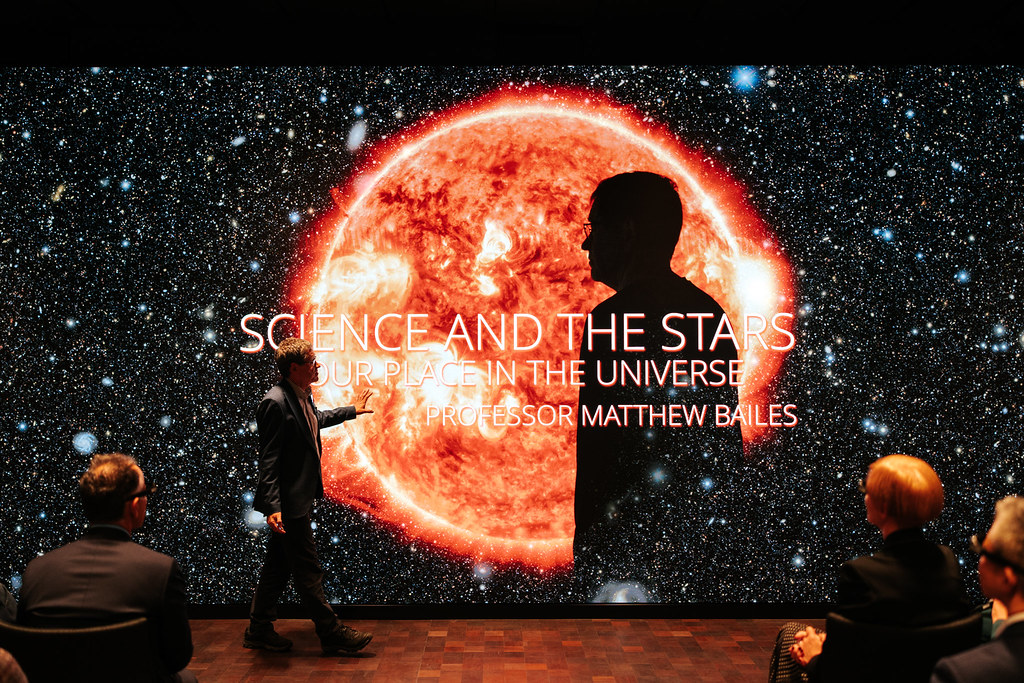
OzGrav’s Director, Professor Matthew Bailes, reflected on the impact of that first signal: “When the first detection happened in 2015, it completely transformed the landscape. Suddenly, gravitational-wave astronomy was real, and Australia needed a Centre of Excellence dedicated to it and that’s how OzGrav was born in 2017.” He added, “Since then, we’ve captured neutron star mergers in both gravitational waves and light, pushed quantum noise limits, and pioneered squeezed-light technology.”

For many in the room, it was collaboration that defined the journey. As Distinguished Professor Susan Scott, from the Australian National University, reminded the audience, “The first detection was only possible through collaboration and that spirit continues to drive gravitational-wave science forward.”

The workshop program reflected that spirit, spanning technical advances, new discoveries, and emerging projects, while also acknowledging the teamwork and persistence that made it all possible.

The celebration was about the future as much as the past. Day two highlighted the next generation of detectors and discoveries with Professor Paul Lasky from Monash University summing up the mood with optimism, “The gravitational-wave future is loud, much louder than GW150914. Every increase in sensitivity lets us hear further into the universe.” He also issued a call to action: “If we want an observatory in Australia, we will need ambition and collaboration to make it happen.”

Over coffee breaks, panel discussions, and even a celebratory cake, there was a palpable sense of both gratitude and anticipation. The workshop marked not only ten years since a signal that changed the world but also the strength of a community that has grown around it, a community ready to take the next bold steps into the cosmos.
Thank you to the local organising committee:


Ten years after gravitational wave scientists proved Einstein’s theory, Stephen Hawking’s landmark prediction has also been proven to be true

A global team of astrophysicists, including Australians, has witnessed a collision between two black holes that was so loud, they were able to use it to test—and prove—Stephen Hawking’s Theory of Black Hole Thermodynamics.

The event, observed by the LIGO, Virgo, and KAGRA collaborations, involved two black holes merging to form a single, larger one, strikingly reminiscent of the historic first detection in 2015. But this time, thanks to a decade of instrumental upgrades and data analysis advances, the signal was captured with three times more clarity, enabling scientists to test two fundamental predictions of black hole physics:

  • Black holes obey the laws of thermodynamics — their surface areas always increase; never decrease.
  • Disturbed black holes behave exactly as predicted by Einstein’s theory of general relativity

“Excited black holes are known to ‘ring’ like cosmic bells at precise frequencies. This is the strongest and cleanest black hole ‘note’ we’ve ever heard,” said Neil Lu, a lead Australian author from the Australian National University and the ARC Centre of Excellence for Gravitational Wave Discovery (OzGrav).

“For the first time, we can clearly identify more than one of the predicted tones from the final black hole, and they match exactly what Einstein’s theory says they should.”

The discovery also tests a profound idea from Stephen Hawking and Jacob Bekenstein: that a black hole’s surface area encodes entropy, a measure of disorder that can only grow. Using this new observation, scientists measured the surface areas of the two original black holes and compared them to that of the final remnant. The result was unambiguous: the total area increased, confirming that entropy had indeed risen.

“We’ve just witnessed the laws of thermodynamics play out on the grandest scales imaginable,” explained Teagan Clarke, a lead Australian author from Monash University and OzGrav. “The final black hole area is bigger than the sum of the originals, just as Hawking predicted.

“This result represents a new step towards understanding the quantum properties of black holes.”

“This merger shows us that black holes obey both simplicity and chaos,” added Dr Ling Sun from the Australian National University and OzGrav. “They’re described only by mass and spin, yet their horizons grow in a way that encodes the disorder of the universe.”

The result marks the culmination of decades of international effort—perfecting ultra-sensitive instruments, pioneering new analysis techniques, and training a generation of scientists to listen for the faintest ripples in spacetime.

“This is a turning point,” said Dr Sun. “A decade after the first detection, gravitational-wave astronomy has evolved from discovery to precision testing of nature’s deepest laws. And with dozens of signals now being detected each year, we’re no longer hearing isolated notes; we’re beginning to hear the full symphony of spacetime.”

The latest discovery is both a celebration of human ingenuity and a glimpse of the transformative science that lies ahead.

Binary stars everywhere: Monash University scientists help rewrite cosmic origin story

Binary stars everywhere: Monash University scientists help rewrite cosmic origin story

A new international study, published in Nature Astronomy, reveals that massive stars are about as likely to form in close binary systems in the low-metal environments of the early Universe as they are today,  reshaping our understanding of stellar evolution and the origins of gravitational wave events.

The research, led by a global team of astronomers and using the European Southern Observatory’s Very Large Telescope in Chile, studied 139 O-type stars in the Small Magellanic Cloud, a nearby dwarf galaxy with just one-fifth the metallicity of our Sun. The findings challenge previous observations that low-mass stars are more likely to be found in binaries in metal-poor environments than in our Galaxy.

Professor Ilya Mandel, from the Monash University School of Physics and Astronomy, and the ARC Centre of Excellence for Gravitational Wave Discovery (OzGrav), co-authored the study, contributing to the statistical analysis testing whether the abundance of binary stars changes with metallicity, the chemical richness of the stars’ environment.

“Our analysis shows there’s no significant change in the fraction of massive stars in close binaries in metal-poor galaxies like the Small Magellanic Cloud,” said Professor Mandel. “That’s exciting, and it tells us that massive binary formation is a fundamental feature of star formation, even in the early Universe.”

The study found that around 70 per cent of the observed O-type stars are in close binaries, and two thirds of them will interact with a companion during their lifetimes, often leading to dramatic phenomena such as supernovae, black holes, or neutron star mergers.

“This is important because binary star interactions are a key pathway to producing exciting and rare outcomes, such as black holes and neutron stars that collide and emit gravitational waves,” Professor Mandel said. “Understanding how common these binaries are in different environments helps us predict how often we should expect to detect gravitational wave events, not just today, but across cosmic history.”

The discovery has far-reaching implications. It strengthens the case that many of the gravitational wave signals detected by LIGO and Virgo come from binary systems born in the early Universe. It also suggests that binary interactions likely played a large role in shaping galaxies and enriching them with heavy elements.

“By studying how stars evolve in environments that mimic the early cosmos, we get a clearer view of how black holes form, how galaxies evolve, and how the Universe became what it is today,” said Professor Mandel.

The research is part of the Binarity at LOw Metallicity (BLOeM) survey, and brings together more than 70 scientists across Europe, the US, Australia, and Israel.

Professor Mandel said the study exemplifies the power of international collaboration and big data analysis in unlocking the secrets of the cosmos.

“We’re in a golden age of discovery,” he said. “And what we’re learning now will echo in our understanding of the Universe for decades to come.”

Scientific paper
A high fraction of close massive binary stars at low metallicity. By: Hugues Sana, Tomer Shenar, Julia Bodensteiner, et al. In: Nature Astronomy, 2 September 2025. [original | preprint (pdf)]

Monash University media release: https://www.monash.edu/science/news-events/news/2025/binary-stars-everywhere-monash-university-scientists-help-rewrite-cosmic-origin-story


A Decade’s Worth Of Gravitational Wave Data Reveals New Black Hole Behaviour

In 1916, Albert Einstein published the paper that predicted gravitational waves – ripples in the fabric of space-time resulting from the most violent phenomena in our distant universe, such as supernovae explosions or colliding black holes.

It took a century for Einstein’s theory to be proven when, in September 2015, the newly commissioned Advanced Laser Interferometer Gravitational-Wave Observatory (LIGO) detectors observed gravitational waves that resulted from merging black holes approximately 1.3 billion light-years away. This watershed achievement earned three of LIGO’s founding members the 2017 Nobel Prize in Physics.

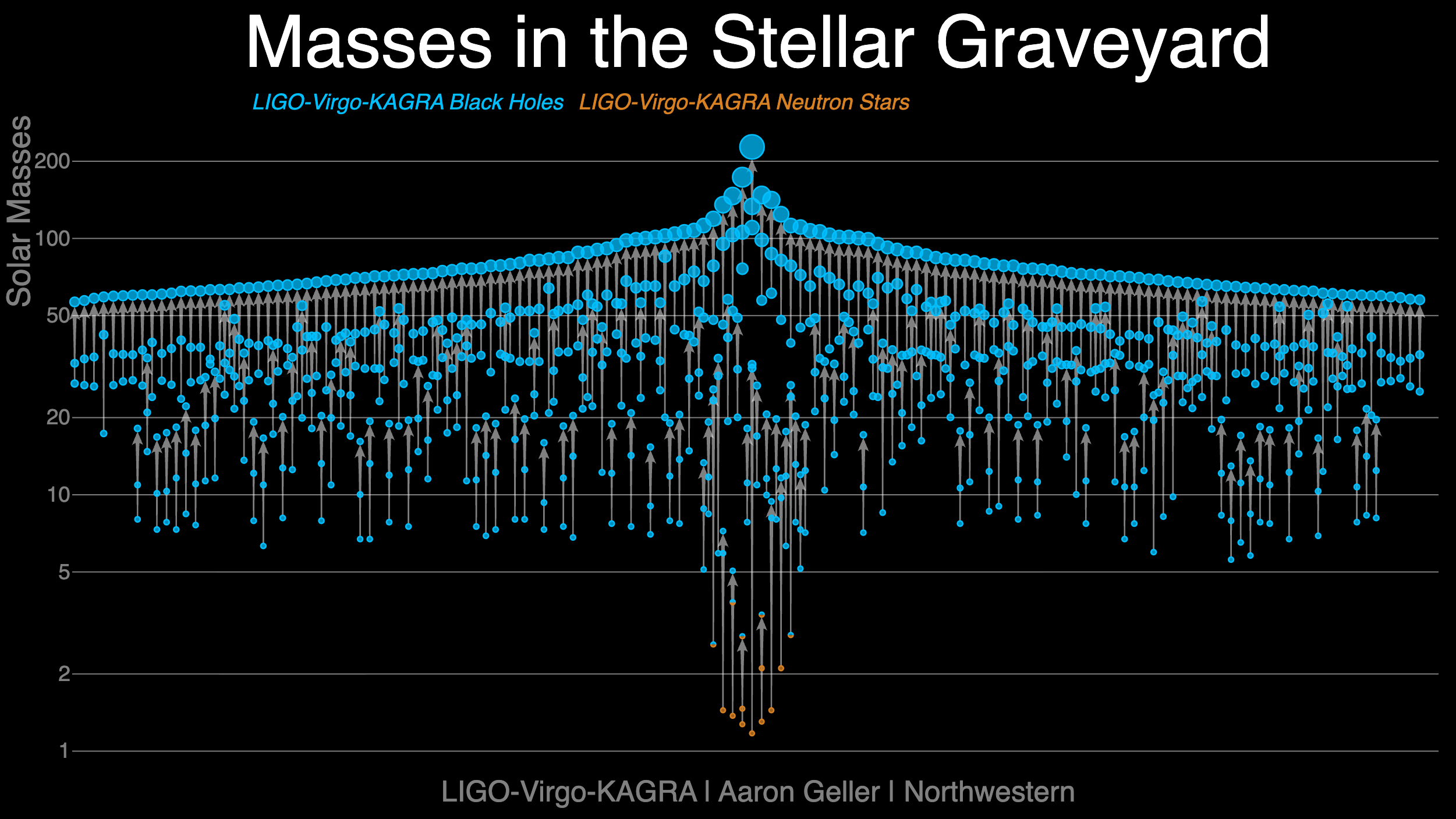
Today, more than 80 Australian researchers, amongst over 2000 scientists globally, have published data on the whole catalogue of gravitational-wave observations accumulated since September 2015. In total, 218 events have been recorded including three types of binary mergers: binary neutron star; neutron star–black hole; and binary black hole mergers.

Black holes have a gravitational pull so strong that nothing, not even light, can escape it. This makes them difficult to detect with conventional telescopes. They are characterised by their masses, measured in units equivalent to the mass of our Sun, and their spins.

According to lead Australian author, Christian Adamcewicz, from Monash University and the ARC Centre of Excellence for Gravitational Wave Discovery (OzGrav), many aspects of these black holes and the stars that form them remain a mystery.

“By observing the rapidly growing population of compact binary mergers through gravitational waves, thanks to our increasingly sensitive detectors, we’re uncovering vital clues about the lives and deaths of stars,” says Dr Ling Sun from the Australian National University and OzGrav. “Taking the 161 of the 218 mergers seen in the last decade, we’ve been able to decipher aspects of their behaviour from their masses,” Adamcewicz added.

“We found that most black holes have masses less than about 40 times that of our Sun. For a while, we’ve had this hypothesis that heavy black hole progenitors – the stars we would normally expect to turn into black holes heavier than 40 Suns – create supernovae so explosive that any evidence of them is annihilated. We’d never seen clear evidence for that previously, but this newly discovered drop off in our observations matches that prediction really well.”

He adds that “it’s not possible to test stuff on this scale in the lab, so, while we wait to collect the data we need, we rely on extrapolating and piecing together our knowledge from other areas. When you’re talking about the most extreme events in the Universe, these assumptions often break down. In this case, what we thought we would see with black holes in that mass range turned out to be accurate.” Sun shares a similar sentiment; “these cosmic collisions serve as natural laboratories, helping us piece together how black holes and neutron stars form, evolve, and interact across the Universe.”

LIGO Detects Most Massive Black Hole Merger to Date

Gravitational waves from record‑breaking black holes challenge current astrophysical models

The LIGO-Virgo-KAGRA (LVK) Collaboration has observed the heaviest black‑hole merger ever detected, registering gravitational waves from two rapidly spinning giants that coalesced into a single black hole about 225 times the mass of our Sun. Designated GW231123, “GW” for gravitational wave and “231123” for the detection date 23 November 2023, the signal was captured during the fourth LVK observing run and publicly released on Monday, 14 July 2025.

“This collision is so distant that the ripples we’re measuring began their journey billions of years ago, long before dinosaurs walked the Earth,” says Professor Eric Thrane, OzGrav Chief Investigator at Monash University. “Yet that tenth of a second blip forces us to rethink how very heavy, rapidly spinning black holes come to be.”

GW231123 involved black holes of roughly 100 M☉ and 140 M☉, far beyond the masses predicted by standard stellar evolution theory. Their extreme spin hints that these monsters may have grown through successive mergers rather than a single stellar collapse.

An infographic detailing the new GW231123 black hole merger.
An infographic detailing the new GW231123 black hole merger. Credit- Simona J. Miller, Caltech

“Their spin is near the limit of what’s physically possible,” Thrane explains. “Observing two black holes whirling so fast when they merge tells us something, either they were born spinning like tops, or something in their lives wound them up to these incredible speeds.”

Unravelling the short, complex GW231123 signal stretched detection hardware and waveform modelling to their limits. Since LIGO’s first discovery in 2015, the LVK network has catalogued ≈300 black‑hole mergers, more than 200 of them in the current observing run alone.

“Gravitational wave astronomy is barely ten years old,” Thrane notes. “Each observing run delivers discoveries that would have been science fiction a decade ago, and this latest event is our most dramatic example yet.”

The calibrated data for GW231123 are now public via the Gravitational‑Wave Open Science Centre (GWOSC), enabling researchers worldwide to probe whether heavy, fast‑spinning black holes form a new population or point to physics beyond current models.

“Maybe this is just the tip of the iceberg,” Thrane says. “If these heavyweight speed demons are common, we could be on the verge of a major leap in our understanding of how the Universe makes, and remakes, black holes.”

Initial results, released on the arXiv, were presented at the joint GR24 and Amaldi16 gravitational-waves meeting in Glasgow, UK, on 14 July.

Information reproduced in part courtesy of Whitney Clavin, Caltech

Watch | Listen | Learn

Astronomers spot nanosecond ‘spark’ from a defunct NASA satellite while looking for Fast Radio Bursts

Astronomers have detected an ultra-bright burst of radio waves from Relay 2, a NASA communications satellite launched in 1964 and silent since 1967. OzGrav Chief Investigator Adam Deller, Professor of Astrophysics at Swinburne University of Technology, was one of the principal authors of the discovery recently accepted for publication in the Astrophysical Journal Letters.

NASA’s Relay 2 spacecraft orbits between 2 091 km and 7 411 km above Earth, and has been offline since 1967. Credit: NASA

NASA’s Relay 2 spacecraft orbits between 2,091 km and 7,411 km above Earth, and has been offline since 1967. Credit: NASA

“This was a chance discovery made when looking for Fast Radio Bursts, which are millisecond-duration radio pulses that originate in distant galaxies. Despite FRBs being discovered almost 20 years ago, we still don’t know what can generate such short and bright radio emission, which is what is driving us to build better and better machines for finding them,” said Prof Deller. 

The pulse, captured on 13 June 2024 by the CRACO upgrade on CSIRO’s ASKAP radio telescope on Wajarri Yamaji Country in Western Australia, lasted under 30 nanoseconds, more than a million times shorter than the blink of an eye. However, the fact that it was so much shorter than a typical FRB wasn’t immediately apparent. 

“FRBs are intrinsically very brief flashes, but the radio pulse is spread out in frequency by the time they get to us on Earth. Longer wavelengths travel more slowly when passing through the ionised plasma in interstellar space, and so this millisecond pulse gets spread out by the time it reaches us, with the lower frequencies arriving hundreds of milliseconds to seconds later,” explained Prof Deller. “We can only correct for this spreading out roughly when doing the high-speed search for FRBs, but once we find a candidate, we can go back and find the absolute best correction, along with the true duration of the signal.” 

Because the Relay 2 signal showed virtually no dispersion in frequency, researchers immediately suspected a nearby origin rather than a distant galaxy. ASKAP imaging confirmed the burst came from roughly 4,500 km away—the satellite’s position at the moment of detection. 

The team’s pre-print, A nanosecond-duration radio pulse originating from the defunct Relay 2 satellite, outlines two likely causes: an electrostatic discharge (ESD) triggered by charge build-up on the spacecraft, or a fleeting plasma cloud created by a micrometeoroid impact. Either mechanism poses a recognised threat to operational satellites. 

“We were lucky to see it. It is certainly possible that there are many more such bursts happening from this or other satellites. However, in the detailed search that we can do with our ASKAP data, we wouldn’t mistake these as actual FRBs—the lack of spreading out of the signal in frequency is a dead giveaway,” said Prof Deller. 

Beyond protecting spacecraft electronics, studying nanosecond-scale ‘sparks’ can also help astronomers filter out false positives when hunting for genuine cosmic FRBs.  

“It was so totally unexpected to see such a short and bright radio pulse originating from a non-operational satellite – we’re both excited to see if this can be of use for identifying hazards for operational satellites, and hopeful that we can use what we learned to further improve the robustness of our FRB searches,” added Prof Deller. 

Collaboration 

The lead author of the paper is Dr Clancy James (Curtin University node, International Centre for Radio Astronomy Research), while other OzGrav contributors include Chief Investigator Prof. Ryan Shannon.

This work leverages the Commensal Real-time ASKAP Fast Transients (CRAFT) survey’s ability to produce rapid, high-resolution images—technology designed for deep-space FRB searches but now proving invaluable closer to home. 

ASKAP is part of the Australia Telescope National Facility and operates with generous support from the Wajarri Yamaji People, the Australian Government and the Pawsey Supercomputing Research Centre. 

Paper: James C. W. et al. (2025) A nanosecond-duration radio pulse originating from the defunct Relay 2 satellite (arXiv:2506.11462).  

Information reproduced in part courtesy of Charlene D’Monte, ICRAR.’Monte, ICRAR. 

Cosmic mystery deepens as astronomers find object flashing in both radio waves and X-rays

Astronomers from the ARC Centre of Excellence for Gravitational Wave Discovery (OzGrav) and the International Centre for Radio Astronomy Research (ICRAR), in collaboration with international teams, have made a startling discovery about a new type of cosmic phenomenon.

The object, known as ASKAP J1832-0911, emits pulses of radio waves and X-rays for two minutes every 44 minutes.

This is the first time objects like these, called long-period transients (LPTs), have been detected in X-rays. Astronomers hope it may provide insights into the sources of similar mysterious signals observed across the sky.

The team discovered ASKAP J1832-0911 by using the ASKAP radio telescope on Wajarri Country in Australia, owned and operated by Australia’s national science agency, CSIRO. They correlated the radio signals with X-ray pulses detected by NASA’s Chandra X-ray Observatory, which was coincidentally observing the same part of the sky.

“Discovering that ASKAP J1832-0911 was emitting X-rays felt like finding a needle in a haystack,” said lead author Dr Ziteng (Andy) Wang from the Curtin University node of ICRAR.

“The ASKAP radio telescope has a wide field view of the night sky, while Chandra observes only a fraction of it. So, it was fortunate that Chandra observed the same area of the night sky at the same time.”

LPTs, which emit radio pulses that occur minutes or hours apart, are a relatively recent discovery. Since their first detection by ICRAR researchers in 2022, ten LPTs have been discovered by astronomers across the world.

Currently, there is no clear explanation for what causes these signals, or why they ‘switch on’ and ‘switch off’ at such long, regular and unusual intervals.

“This object is unlike anything we have seen before,” Dr Wang said.

“ASKAP J1831-0911 could be a magnetar (the core of a dead star with powerful magnetic fields), or it could be a pair of stars in a binary system where one of the two is a highly magnetised white dwarf (a low-mass star at the end of its evolution).”

However, even those theories do not fully explain what we are observing. This discovery could indicate a new type of physics or new models of stellar evolution.”

Detecting these objects using both X-rays and radio waves may help astronomers find more examples and learn more about them.

According to second author Professor Nanda Rea from the Institute of Space Science (ICE-CSIC) and Catalan Institute for Space studies (IEEC) in Spain, “Finding one such object hints at the existence of many more. The discovery of its transient X-ray emission opens fresh insights into their mysterious nature,”

“What was also truly remarkable is that this study showcases an incredible teamwork effort, with contributions from researchers across the globe with different and complementary expertise,” she said.

The discovery also helps narrow down what the objects might be. Since X-rays are much higher energy than radio waves, any theory must account for both types of emission – a valuable clue, given their nature remains a cosmic mystery.

The paper “Detection of X-ray Emission from a Bright Long-Period Radio Transient” was published overnight in Nature: https://www.nature.com/articles/s41586-025-09077-w 

ASKAP J1832-0911 is located in our Milky Way galaxy about 15,000 light-years from Earth.

Full story available – https://www.icrar.org/xray-transient/

The Conversation article: https://theconversation.com/x-rays-have-revealed-a-mysterious-cosmic-object-never-before-seen-in-our-galaxy-256797

MORE INFORMATION

ICRAR

The International Centre for Radio Astronomy Research (ICRAR) is a joint venture between Curtin University and The University of Western Australia, with support and funding from the State Government of Western Australia. ICRAR is an internationally renowned research centre in radio astronomy, helping to build and support the world’s most powerful radio telescope.

Chandra X-ray Observatory

NASA’s Marshall Space Flight Center in Huntsville, Alabama, manages the Chandra program. The Smithsonian Astrophysical Observatory’s Chandra X-ray Center controls science operations from Cambridge, Massachusetts, and flight operations from Burlington, Massachusetts.

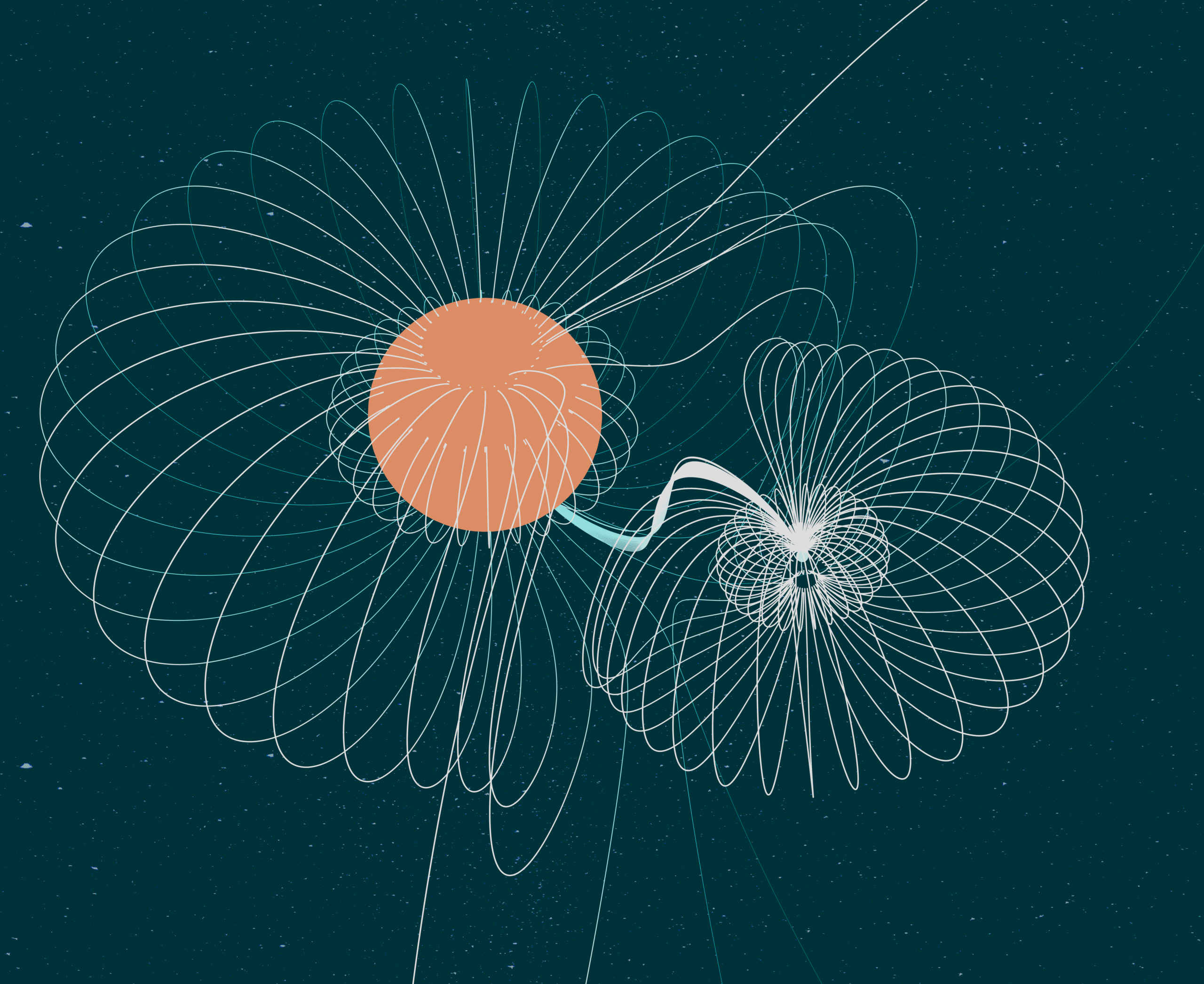
SHOCK INSIGHTS – WHY OBJECTS IN THE RADIO SKY TWINKLE

It’s one of the first things any of us learn about astronomy – stars twinkle while planets don’t. However, other point-like objects in the radio sky also twinkle, or “scintillate,” including spinning neutron stars known as pulsars. A team led by Australian scientists has used a scintillating pulsar to perform tomography of the interstellar medium in our galaxy, mapping previously unseen layers of plasma, including within a rare structure called a bow shock.  

Artist’s impression of a pulsar bow shock scattering a radio beam. Credit: Carl Knox / Swinburne / OzGrav 

The discoveries, published today in Nature Astronomy, challenge existing theories of our local interstellar medium and will lead to new models for pulsar bow shocks. 

The study, led by Dr Daniel Reardon from the ARC Centre of Excellence for Gravitational Discovery and Swinburne University of Technology, is the culmination of over 80 hours of observing the nearest and brightest millisecond pulsar to Earth using MeerKAT, the most powerful radio telescope in the Southern Hemisphere, located in South Africa. 

While pulsars emit radio waves rather than visible light (like stars), they still “twinkle” because of turbulence in the plasma that exists in the space between stars. “This plasma is created from gas that is heated and stirred up by energetic events in our galaxy, like exploding stars,” Dr Reardon said. 

“When a pulsar scintillates, it reveals valuable information about the location, structure, and motion of the plasma, as well as about the dynamics of the pulsar—we use scintillation to get unique insights.” 

The observed pulsar, J0437-4715, is located relatively nearby to our solar system, within an area of our galaxy called the Local Bubble—a region almost devoid of gas and dust, created by the explosions of 15 stars about 14 million years ago.  

Using the data gleaned from MeerKAT, the scientists studied patterns called “scintillation arcs,” which provide a tomographic map of plasma structures in the galaxy that are impossible to study using other methods. “These scintillation arcs revealed an unexpected abundance of compact plasma structures within our Local Bubble, which was thought to be more diffuse,” Dr. Reardon said. 

For the first time, the team also used scintillation to study the bow shock created by the pulsar as it moves supersonically through the interstellar medium. “Travelling at Mach 10, the pulsar and its energetic wind of fast-moving particles create a shock wave of heated gas.” 

This bow shock has been photographed as the energy of the supersonic pulsar heats Hydrogen enough for it to glow red. Yet while most pulsars should create bow shocks, only about a dozen have ever been observed because they are so faint. This study marks the first time scientists have been able to peer inside a pulsar bow shock to measure plasma speeds. “To our surprise, the scintillation arcs revealed multiple plasma layers inside the shock, including a structure moving towards the front of the shock,” Dr Reardon said. 

This groundbreaking study, made possible by the pulsar’s closeness to Earth and the capacity of the MeerKAT telescope, achieved several significant firsts including a measurement of the three-dimensional shape of a bow shock, measurement of plasma speeds inside the shock, and the most detailed view of plasma structures within our Local Bubble. “We can learn a lot from a twinkling pulsar!” 

Read more via The Conversation: https://theconversation.com/twinkling-star-reveals-the-shocking-secrets-of-turbulent-plasma-in-our-cosmic-neighbourhood-243022